


Hope for the Heart
Posts by Hope for the

How Jesus Helps Us in our Grief
Article Summary “How Jesus Helps Us in Our Grief” explains that grief looks different for everyone, yet Jesus meets each person with exactly what they need. In John 11, He responds to Martha with truth and hope, reminding her of eternal life, while He responds to Mary with empathy and tears, entering her pain before performing a miracle. Jesus still comforts us this way today, offering Scripture and assurance when we need truth and drawing near with compassion when we need presence. Grief is real, but so is God’s nearness, His promises, and the support of His people. We never grieve alone, because Christ carries our burdens daily. The Uniqueness of Grief Grief doesn’t look the same for everyone. For some, it feels like sadness, shock, or confusion. For others, it brings anger, exhaustion, or numbness. But whatever form it takes, the message of Scripture is clear: Jesus meets you where you are. In John 11 , after the death of Lazarus, Jesus encounters two grieving sisters – Mary and Martha. Both come to Him with the same words: “Lord, if you had been here, my brother would not have died.” (John 11:21, 32) But Jesus responds to each one differently, revealing a powerful truth about how He ministers to us in grief. Jesus Meets You Where You Are To Martha, Jesus Offers Hope and Truth. Jesus tells her: “I am the resurrection and the life. The one who believes in me will live, even though they die …” (John 11:25–26) He speaks directly to her need for truth and assurance. He reminds her that death is not the end – there is eternal life through faith in Him. To Mary, Jesus Offers Empathy and Tears. Mary says the same words as Martha, but Jesus’ response is different. The Bible says: “Jesus saw her weeping … he was deeply moved in spirit … Jesus wept.” (John 11:33–35) Even though He knew He was about to raise Lazarus from the dead, Jesus stopped to weep with Mary. He saw her pain, felt it deeply, and entered into it with her. “Jesus Christ is the same yesterday and today and forever.” (Hebrews 13:8) And He still responds this way today – with truth for those seeking answers and tears for those simply needing to be held. Jesus & Your Grief Jesus meets us in our grief with what we need most. If you need truth, He gently points you to Scripture. If you need comfort, He draws near with compassion. What do you need today? If You Need Truth … Remember His Promises: “Even though I walk through the valley of the shadow of death, I will fear no evil, for you are with me … I shall dwell in the house of the LORD forever.” (Psalm 23:4, 6 ESV) “You have seen my troubles, and you care about the anguish of my soul.” (Psalm 31:7 NLT) “The LORD is close to the brokenhearted and saves those who are crushed in spirit.” (Psalm 34:18) “My grace is sufficient for you, for my power is made perfect in weakness.” (2 Corinthians 12:9) “He will wipe every tear from their eyes … There will be no more death or mourning or crying or pain.” (Revelation 21:4) If You Need Presence … Pour Out Your Heart: “He was … a man of sorrows, acquainted with deepest grief.” (Isaiah 53:3 NLT) “Trust in him at all times, you people; pour out your hearts to him, for God is our refuge.” (Psalm 62:8) Jesus welcomes your pain, your tears, your memories, and your cries. You don’t have to clean up your grief to bring it to Him. You Don’t Grieve Alone Grief is real, but so is God’s presence. So is His Word. And so are His people. God offers comfort through Scripture, the Holy Spirit, and the loving support of others. He walks with you. He stays with you. He carries your burdens daily. “Praise be to the Lord, to God our Savior, who daily bears our burdens.” (Psalm 68:19) Explore More Biblical Help for Grief: Keys for Living: Grief More Biblical Resources Hope Talks Podcast

Growing in Gratitude: Giving Thanks in Every Season
Article Summary Gratitude is more than a seasonal practice—it’s a way of life rooted in trusting God’s character and faithfulness. This article explores why Scripture calls believers to give thanks in every circumstance and how gratitude shapes our lives. It addresses common barriers to gratitude such as comparison, entitlement, distraction, and suffering, while offering practical ways to cultivate a thankful heart. Even in difficult seasons, gratitude becomes an act of faith that shifts our focus from what we lack to the God who provides, reminding us that His goodness and love endure forever. As Thanksgiving approaches, we’re reminded to pause and give thanks. But gratitude isn’t meant to be a one-day celebration – it’s a way of life. Scripture calls us to “give thanks in all circumstances; for this is God’s will for you in Christ Jesus” (1 Thessalonians 5:18). Gratitude is not dependent on our situation or circumstances – it’s rooted in who God is and what He has done for us. Why Gratitude Matters Throughout the Bible, thanksgiving is far more than polite manners – it’s an act of worship. The psalmist writes, “Give thanks to the LORD, for he is good; his love endures forever” (Psalm 136:1). Gratitude turns our focus away from what we lack and toward the One who provides all we need. The apostle Paul links thankfulness to spiritual maturity, urging believers to be “overflowing with thankfulness” (Colossians 2:7). A thankful heart acknowledges God’s faithfulness and strengthens our trust in Him, especially in difficult seasons. Gratitude changes our perspective – it lifts our eyes from our problems to God’s promises. Barriers to Gratitude Even though we know we should be thankful, gratitude can be hard to sustain. On our Hope Talks Thanksgiving episode , Haley and Dustin explored some of the most common barriers to gratitude: Comparison: We lose sight of our blessings when we measure them against others. Entitlement: Gratitude fades when we believe we’re owed certain things. Negativity and distraction: When we dwell on what’s missing or rush through life, we forget to notice God’s daily mercies. Pain and suffering: Grief and hardship can cloud our view of God’s goodness. Taking things for granted: We often thank God for the extraordinary and overlook the everyday – the safety of another drive, the food on the table, the breath in our lungs. Yet even in pain and uncertainty, the Bible calls us to give thanks. Gratitude doesn’t mean ignoring grief or pretending everything is fine – it means trusting that God is still faithful, still present, and still working for our good. How to Cultivate a Thankful Heart Gratitude doesn’t happen automatically – it grows through daily practice. Here are a few ways to begin: Keep a gratitude journal. Each day, write down three specific things you’re thankful for. Express thanks to others. Send a note or text to someone who’s encouraged you. Pray with thanksgiving. As Philippians 4:6 reminds us, bring your prayers “with thanksgiving.” Reflect on Scripture. Verses like Psalm 100:4 and Colossians 3:17 remind us to live with thankfulness. Remember past blessings. Recall how God has provided and sustained you – just as Psalm 77:11 says, “I will remember the deeds of the LORD.” Grow in Gratitude This Season If you’d like to take your grow deeper in this area, download our free devotional, Growing in Gratitude: 12 Reasons to Be Thankful . This step-by-step guide walks through twelve areas of life to thank God for – from His character and Word to family, friends, work, and more. It’s a meaningful way to reflect, pray, discuss, and give thanks to the Lord. This Thanksgiving – and every day – may we always be “abounding in thanksgiving” (Colossians 2:7 ESV), for God is good, and His love truly endures forever. Download the Thanksgiving devotional here.

The 7 Lies of Abuse
Article Summary “The 7 Lies of Abuse” exposes the harmful messages often internalized through verbal and emotional abuse and replaces each one with biblical truth. While abuse whispers lies such as “I am worthless, unlovable, or beyond hope,” God declares that every person is precious, chosen, fully loved, and never beyond His care. Healing begins by identifying these lies, rejecting misplaced shame, and replacing them with Scripture that affirms our true identity in Christ. By taking every thought captive and renewing the mind with God’s Word, survivors can walk in freedom and remember that abuse does not get the final word – God does. This article is adapted from our Keys for Living book on Verbal & Emotional Abuse: Victory Over the Power of Abuse. If you’ve been told you’re worthless, unlovable, or undeserving of kindness, you may have started to believe it over time. Verbal and emotional abuse often plants deep lies in our hearts … lies that can affect how we view ourselves, others, and even God. But here’s the truth: Abuse does not get the final word – God does. His Word declares your infinite worth, your unshakable identity, and His unwavering love. Healing begins when you start replacing the lies of abuse with the truth of God’s Word. “Teach me your way, O Lord, that I may walk in your truth.” (Psalm 86:11) How to Replace the Lies of Abuse with God’s Truth Lie #1: “I’m worthless. I don’t matter.” Truth: You matter deeply to God. He created you with purpose and sees you as precious and honored. “You are precious to me. You are honored, and I love you.” (Isaiah 43:4 NLT) Lie #2: “No one will ever accept me.” Truth: The Lord has chosen and accepted you. He will never reject you. “I have chosen you and have not rejected you. So do not fear, for I am with you … I will strengthen you and help you.” (Isaiah 41:9–10) Lie #3: “I am unlovable.” Truth: Nothing can separate you from the love of God. “Nothing can ever separate us from God’s love … not even the powers of hell can separate us from God’s love.” (Romans 8:38 NLT) Lie #4: “I deserve to be abused – it’s my fault.” Truth: No one deserves abuse. You are not to blame for someone else’s sin or cruelty. “For we are each responsible for our own conduct.” (Galatians 6:5 NLT) Lie #5: “There is no hope for me.” Truth: With God, there is always hope. Your story is not over. “There is surely a future hope for you, and your hope will not be cut off.” (Proverbs 23:18) Lie #6: “God doesn’t care about me.” Truth: God invites you to cast every care on Him, because He cares deeply for you. “Give all your worries and cares to God, for he cares about you.” (1 Peter 5:7 NLT) Lie #7: “God is disappointed in me. He wants nothing to do with me.” Truth: The Lord is full of compassion and wants a relationship with you. “The Lord is gracious and compassionate, slow to anger and rich in love … The Lord is near to all who call on him.” (Psalm 145:8–9, 18) Take Every Thought Captive You may have been led to believe other lies. Write them down, then look to God’s Word for truth that directly speaks to them. “Take captive every thought to make it obedient to Christ.” (2 Corinthians 10:5) As you do this, over time, God’s Word will begin to renew your mind and heal your heart. “Do not conform to the pattern of this world, but be transformed by the renewing of your mind. Then you will be able to test and approve what God’s will is — his good, pleasing and perfect will.” (Romans 12:2) You Are Not Alone You are not what others say about you – you are who God says you are. And He says you are loved, accepted, chosen, and valued. Explore More Biblical Resources on Healing from Abuse: Keys for Living: Verbal & Emotional Abuse Hope Talks Podcast More Biblical Resources

You're Not Alone: The Gift of Biblical Community
Article Summary “You’re Not Alone: The Gift of Biblical Community” reminds readers that while the enemy wants us to believe we are isolated in our struggles, God designed us for connection and promises His constant presence. Jennie Allen shares that one of the enemy’s greatest lies is that no one understands or is struggling like we are, yet Scripture shows that God is near to the brokenhearted and calls us into community where we can receive encouragement, support, and truth. Biblical community reflects God’s heart as we bear one another’s burdens, push back against isolation, and walk together toward healing and hope. The article invites readers to find connection and encouragement through relationships and through gathering at the annual Hope Together Conference. “Fear not, for I am with you” (Isaiah 41:10). This is God’s most repeated and precious promise to us. I am with you. That’s why Jesus – Immanuel – came to us. Even some of His last words to the disciples were a reminder of His constant presence … “Surely I am with you always, to the very end of the age” (Matthew 28:20). Yet it doesn’t always feel that way, does it? When we’re struggling, hurting, anxious, or afraid … the enemy wants us to believe we are all alone. We were honored to welcome bestselling author, podcaster, and speaker Jennie Allen to Hope Talks , where she shared a powerful truth for anyone walking through pain or feeling alone: “The enemy wants more than anything for you to believe that you are alone … that no one would understand … that no one else is struggling like you are. That’s just not true .” Jennie’s words remind us that God created us for community. We are made to be in relationship with one another … to uplift, encourage, and come alongside one another. The Lord knows that it is not good for us to be alone (Genesis 2:18). You are not meant to suffer in silence or carry your burdens by yourself. Healing and restoration often begin when we step into the light – into relationship, vulnerability, and honesty – and allow others to walk with us. That’s the beauty and power of biblical community: we reflect God’s heart to one another as we offer comfort, truth, and our presence. If you are feeling alone in your struggle or in your ministry, meditate on these helpful reminders from God’s Word – and consider joining us this fall at our Hope Together Conference , where you can find support, community, and encouragement. See details below. 3 Truths to Remember When You Feel Alone God is always with you. Even in our loneliest moments, God promises His nearness and presence. We may feel alone, but we are never forsaken or forgotten. Our struggles are not a surprise to God. He sees, and He cares. “The Lord is close to the brokenhearted and saves those who are crushed in spirit” (Psalm 34:18). We were made for one another. God designed us for connection. He never meant for us to carry life’s burdens alone. There is strength, comfort, and profound healing when we walk together. “Two people are better off than one, for they can help each other succeed. If one person falls, the other can reach out and help” (Ecclesiastes 4:9-10 NLT). While the enemy isolates, God invites. Isolation is not from God. The enemy thrives on secrecy and shame, but God calls us into light, truth, and community. To suffer in silence is not what God wants for us. When we speak up, reach out, and link arms with one another … we push back against the lie that we’re alone in our struggles. “Therefore encourage one another and build each other up” (1 Thessalonians 5:11). A Place for You to Connect At Hope for the Heart, we often say, “it’s about relationship.” That’s our heart behind the Hope Together Conference. We created this conference as a space where you can be poured into so that you can be refreshed and equipped to pour into others. Whether you’re struggling or serving in ministry as a counselor, life coach, pastor, or ministry leader … you need encouragement, too. At Hope Together, you’ll connect with others who share your heart for counseling, coaching, and making disciples. You’ll hear from inspiring speakers, have meaningful times of worships and connection, and walk away with renewed hope, strength, and support. Join Us This Fall in Texas! Whether you're helping others through crisis or walking through your own season of healing, Hope Together is for you. We’d love to see you there! When : September 25–27, 2025 Where : Allen, TX - or livestream from anywhere in the world Keynote Speakers : Jennie Allen, Christine Caine, Mark Batterson, June Hunt, George Barna, and more You don’t have to do this alone. Let’s find hope … together! Learn more & Sign up -->

Hope Means Everything: A Fresh Update at Hope for the Heart
Article Summary “Hope Means Everything: A Fresh Update at Hope for the Heart” announces a renewed brand focus centered on connecting people to biblical hope for life’s hardest challenges. In a world overwhelmed by anxiety, depression, loneliness, and spiritual confusion, Hope for the Heart remains committed to offering clear, practical, and professionally informed resources rooted in God’s Word. The update reinforces the ministry’s mission: to equip individuals and caregivers with real answers that lead to freedom and healing in Christ. No matter the struggle, there is every reason for hope – because hope means everything. Hope Means Everything: A Fresh Update at Hope for the Heart Sharing the good news that there is every reason for hope for every challenge in life Hope for the Heart has always been committed to providing biblical hope and practical help for the real challenges people face every day. Challenges like anxiety, anger, depression, divorce, grief, parenting, and relationships – all things we can find hope and answers to in God’s Word. As we look at the world around us, it’s clear that God’s Word is desperately needed today. Because it offers the hope that does not disappoint – the hope of Christ. That’s why Hope for the Heart is refocusing our brand to connect more people to real answers that give them every reason to hope. Because hope means everything. Especially in a world where life rarely plays out like we expect. It’s no secret that people everywhere are struggling. You or someone you know is likely battling anxiety, grief, loneliness, burnout, marriage problems, or is spiritually lost. According to the World Health Organization, over 260 million people worldwide suffer from depression, and more than 280 million people suffer from anxiety disorders. In the U.S. alone, more than half of the population struggles with loneliness, worry, and hopelessness – which often translate into today’s most serious mental health diagnoses of anxiety, depression, and suicide. There is a growing feeling among people today that the challenges of life are only getting worse. That’s why at Hope for the Heart, we are committed to helping thousands of people grow personally and be equipped to help others with practical tools that are professionally informed, simply formatted, and rooted in God’s Word. From mental health challenges to relational conflicts, from emotional struggles to spiritual life issues, we’re providing clear answers from God’s Word – to help you and those you serve live whole and free. To learn more about the new brand, watch the short video above. And remember, no matter what you’re facing today, there is every reason for hope! “There is surely a future hope for you.” (Proverbs 23:18)

God's Plan for You
Article Summary “God’s Plan for You” explains that no matter your past or present struggles, there is hope because God has a loving plan for your life that begins with a relationship with Jesus Christ. Using four key truths, the article outlines God’s purpose (salvation through Christ), the problem (sin separates us from God), God’s provision (Jesus paid the penalty for sin), and our part (surrendering our lives to Him in faith). Scripture makes clear that salvation is a gift of grace, not something we earn, and that those who trust in Jesus receive forgiveness, new life, and the indwelling Holy Spirit. God’s plan is not distant or hidden – it is an open invitation to every person to believe, surrender, and walk in the hope and future He promises. Whether you’re trying to make sense of your past, trying to overcome something in the present, or trying to make changes for a better future, the Lord cares about you. He loves you. No matter what challenges you or your loved ones are facing, no matter the pain or difficult feelings you may be experiencing, no matter what you’ve done or what’s been done to you, there is hope. And that hope is found in Jesus Christ. God has a plan for your life, and it begins with a personal relationship with Jesus. The most important decision you can ever make is whether you will accept His invitation. If you have never made that decision, these four simple truths can help you start your journey together with Him. “‘For I know the plans I have for you,’ declares the Lord, ‘plans to prosper you and not to harm you, plans to give you hope and a future.’” (Jeremiah 29:11) 4 Points of God’s Plan God’s Purpose for You: Salvation What was God’s motivation in sending Jesus Christ to earth? To express His love for you by saving you! The Bible says, “God so loved the world that he gave his one and only Son, that whoever believes in him shall not perish but have eternal life. For God did not send his Son into the world to condemn the world, but to save the world through him” (John 3:16–17). What was Jesus’ purpose in coming to earth? To forgive your sins, to empower you to have victory over sin, and to enable you to live a fulfilled life! Jesus said … “I have come that they may have life, and have it to the full.” (John 10:10) The Problem: Sin What exactly is sin? Sin is living independently of God’s standard – knowing what is wrong and doing it anyway – also knowing what is right and choosing not to do it. The apostle Paul said, “I know that nothing good lives in me, that is, in my sinful nature. I want to do what is right, but I can’t. I want to do what is good, but I don’t. I don’t want to do what is wrong, but I do it anyway” (Romans 7:18–19 NLT). What is the major consequence of sin? Spiritual death, eternal separation from God. The Bible says, “Your iniquities [sins] have separated you from your God” (Isaiah 59:2). Scripture also says … “The wages of sin is death, but the gift of God is eternal life in Christ Jesus our Lord.” (Romans 6:23) God’s Provision for You: The Savior Can anything remove the penalty for sin? Yes! Jesus died on the cross to personally pay the penalty for your sins. The Bible says, “God demonstrates his own love for us in this: While we were still sinners, Christ died for us” (Romans 5:8). What is the solution to being separated from God? Belief in (entrusting your life to) Jesus Christ as the only way to God the Father. Jesus said, “I am the way and the truth and the life. No one comes to the Father except through me” (John 14:6). The Bible says … “Believe in the Lord Jesus, and you will be saved.” (Acts 16:31) Your Part: Surrender Give Christ control of your life, entrusting yourself to Him. Jesus said, “Whoever wants to be my disciple must deny themselves and take up their cross and follow me. For whoever wants to save their life will lose it, but whoever loses their life for me will find it. What good will it be for someone to gain the whole world, yet forfeit their soul?” (Matthew 16:24–26). Place your faith in (rely on) Jesus Christ as your personal Lord and Savior and reject your “good works” as a means of earning God’s approval. The Bible says, “It is by grace you have been saved, through faith – and this is not from yourselves, it is the gift of God – not by works, so that no one can boast” (Ephesians 2:8–9). A Prayer of Surrender Has there been a time in your life when you know you’ve humbled your heart and received Jesus Christ as your personal Lord and Savior – giving Him control of your life? You can tell God that you want to surrender your life to Christ in a simple, heartfelt prayer like this: “God, I want a real relationship with you. I admit that many times I’ve chosen to go my own way instead of your way. Please forgive me for my sins. Jesus, thank you for dying on the cross to pay the penalty for my sins. Come into my life to be my Lord and my Savior. Change me from the inside out and make me the person you created me to be. In your holy name I pray. Amen.” What Can You Now Expect? When you surrender your life to Christ, you receive the Holy Spirit who empowers you to live a life pleasing to God. The Bible says, “His divine power has given us everything we need for a godly life” (2 Peter 1:3). Jesus assures those who believe with these words: “Truly I tell you, whoever hears my word and believes him who sent me has eternal life and will not be judged but has crossed over from death to life.” (John 5:24)

Where Is God in Our Grief?
Article Summary “Where Is God in Our Grief?” explores the painful questions that arise in seasons of deep loss and uses C.S. Lewis’s honest reflections in A Grief Observed to show that even strong believers can feel abandoned and confused. Like the psalms of lament, Lewis cried out to God yet continued seeking Him, demonstrating that true faith brings raw emotion before the Lord rather than hiding it. Grief may distort our view of God, but He welcomes our pain, invites us to pour out our hearts, and sustains us as we wrestle. Though answers may not come quickly, God’s presence, compassion, and promise of eternal comfort remain certain, and one day He will wipe away every tear. This article is adapted from our Keys for Living book on Grief: Living at Peace with Loss . In T he Chronicles of Narnia , C.S. Lewis invites readers into a magical world filled with wonder and truth. In Mere Christianity , he presents clear, reasoned arguments for the Christian faith. But in A Grief Observed , Lewis invites us into something far more raw and real – his personal agony after the death of his beloved wife, Joy. He writes honestly about God’s perceived absence in the darkest hours of his life … “… where is God? … go to Him when your need is desperate … and what do you find? A door slammed in your face … After that, silence … There are no lights in the windows. It might be an empty house. Was it ever inhabited? It seemed so once …” (C.S. Lewis, A Grief Observed) Lewis’s words echo the raw laments of Scripture – honest, unfiltered cries of grief. “How long, Lord? Will you forget me forever? How long will you hide your face from me?” (Psalm 13:1–2) “My God, my God, why have you forsaken me? … I cry out by day, but you do not answer …” (Psalm 22:1–2) The Messiness of Grief Grief isn’t neat – it’s necessary. Lewis’s A Grief Observed is, in many ways, a modern-day psalm of lament. It gives voice to feelings many are afraid to speak. It shows us that grief can distort our perspective, cloud our view of God, and leave us feeling abandoned. Lewis wrote: “The time when there is nothing at all in your soul except a cry for help may be just the time when God can’t give it … Perhaps your own reiterated cries deafen you to the voice you hoped to hear.” (C.S. Lewis, A Grief Observed) But here’s the key: Lewis didn’t stop knocking. He didn’t stop praying. He didn’t stop seeking. That’s what faith does – even when confused or hurting, it turns to God. Grief and faith often walk hand-in-hand, not on the mountaintop, but through the valley. And when Lewis laid his pain before God, something changed: “When I lay these questions before God, I get no answer. But … it is not the locked door. It is … a silent, certainly not uncompassionate, gaze … Like, ‘Peace, child; you don’t understand.’” (C.S. Lewis, A Grief Observed) Grieving with God God doesn’t reject us in our pain – He welcomes us. “Trust in him at all times, you people; pour out your hearts to him, for God is our refuge.” (Psalm 62:8) The Psalms are filled with gut-wrenching emotion. They model what it looks like to come to God angry, afraid, confused, or grieving – and still cling to Him. That’s what Lewis teaches us. That’s what Scripture teaches us. “Cast your burden on the Lord, and he will sustain you; he will never permit the righteous to be moved.” (Psalm 55:22) Whether you're grieving the loss of a loved one, walking someone through death, or just facing deep pain, bring your emotions and questions to the Lord. He can handle them. He welcomes them. He welcomes you . The Promise of Hope We may not get all the answers, but we get God . His presence. His peace. His promises. And one day, He will wipe away every tear and silence every question. “Look! God’s dwelling place is now among the people … He will wipe every tear from their eyes. There will be no more death or mourning or crying or pain …” (Revelation 21:3–4) Explore More Hope-Filled Resources: Keys for Living on Grief Hope Talks Podcast
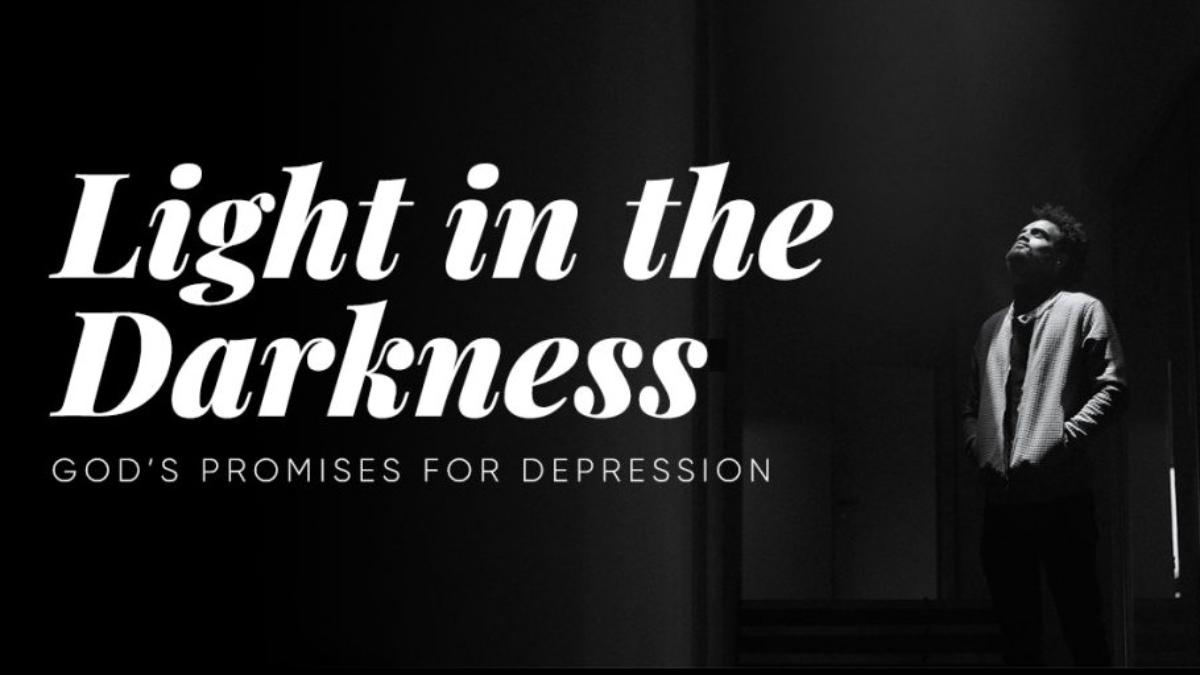
Light in the Darkness: God's Promises for Depression
Article Summary God’s Promises for Depression offers biblical encouragement for those walking through seasons of deep heaviness. Adapted from the Keys for Living on Depression, the article reminds readers that even when hope feels distant, God draws near. Scripture after scripture declares that God sees your pain, hears your cries, and shines light into your darkness. He strengthens the weary, lifts up the fallen, comforts the brokenhearted, and invites you to pour out your heart to Him. The article highlights God’s promises of presence, peace, help, and future hope, culminating in the reminder that one day, He will wipe away every tear. It ends with a powerful reflection from Lamentations 3, showing how we can acknowledge pain, grieve honestly, speak truth to ourselves, and hold fast to God’s daily mercies. The message is clear – depression does not have the final word. God is with you, He is for you, and His hope remains. The pressures and stresses of life often weigh us down. When our hearts are heavy and energy is low, the clouds of depression seem to block out any ray of hope. But even in the darkness of depression – God walks with us, carries our burdens, and shines the light of His Word on our despair. The following is a sample from our Keys for Living book on Depression – more info below. We pray these truths from God’s Word will encourage you and bring light in the darkness. “The Lord is God, and he has made his light shine on us.” (Psalm 118:27) God is with you in your depression. “Do not fear, for I am with you; do not be dismayed, for I am your God. I will strengthen you and help you; I will uphold you with my righteous right hand.” (Isaiah 41:10) God sees your pain and suffering. “God, see the trouble of the afflicted; you consider their grief and take it in hand.” (Psalm 10:14) God hears your cries and listens to you in your pain. “. . . the Lord has heard my weeping.” (Psalm 6:8) God wants to give you light in your darkness. “It is you who light my lamp; the Lord my God lightens my darkness.” (Psalm 18:28 ESV) God wants to lift you up when you’re feeling down. “The Lord upholds all who fall and lifts up all who are bowed down.” (Psalm 145:14) God wants you to talk to Him when you’re depressed. “Trust in him at all times, you people; pour out your hearts to him, for God is our refuge.” (Psalm 62:8) God wants to comfort you. “I, yes I, am the one who comforts you.” (Isaiah 51:12) God wants to give you peace. “Peace I leave with you; my peace I give you. I do not give to you as the world gives. Do not let your hearts be troubled and do not be afraid.” (John 14:27) God wants to give you hope. “‘For I know the plans I have for you,’ declares the Lord, ‘plans to prosper you and not to harm you, plans to give you hope and a future.’” (Jeremiah 29:11) God wants you to trust Him. “The Lord is my strength and my shield; my heart trusts in him, and he helps me.” (Psalm 28:7) God wants you to comfort others who are depressed. “The Father of compassion and the God of all comfort . . . comforts us in all our troubles, so that we can comfort those in any trouble with the comfort we ourselves receive from God.” (2 Corinthians 1:3–4) God will one day wipe away all your tears – and there will be no more sorrow or suffering. “He will wipe every tear from their eyes, and there will be no more death or sorrow or crying or pain. All these things are gone forever.” (Revelation 21:4 NLT) Key Passage on Depression: Lessons from Lamentations 3:19–26 (NLT) Acknowledge your pain and suffering to God and others. “The thought of my suffering . . . is bitter beyond words.” (v.19) Allow yourself time to grieve and process your emotions. “I will never forget this awful time, as I grieve over my loss.” (v.20) Remember that there is always hope. “Yet I still dare to hope when I remember this…” (v.21) Realize that God’s love for you never ends. “The faithful love of the Lord never ends! His mercies never cease.” (v.22) Rejoice in God’s daily faithfulness and mercy toward you. “Great is his faithfulness; his mercies begin afresh each morning.” (v.23) Speak God’s words of truth and hope to yourself. “I say to myself, ‘The Lord is my inheritance; therefore, I will hope in him!’” (v.24) Keep relying on and looking to God, who is good to you. “The Lord is good to those who depend on him, to those who search for him.” (v.25) Rejoice in God’s daily faithfulness and mercy toward you. “So it is good to wait quietly for salvation from the Lord.” (v.26)

Sharing Hope Around the World: Hope for the Heart’s International Ministry
Article Summary This article shares the story behind Hope for the Heart’s international ministry and how a growing need for biblical discipleship led to a global outreach effort now impacting more than 60 countries. What began with ministry leaders asking for help evolved into training pastors, translating resources, and equipping churches to address real-life struggles through God’s Word. Using the Keys for Living Library and partnerships with local leaders, Hope for the Heart helps communities navigate issues like trauma, addiction, relationships, and mental health while strengthening discipleship and Christ-centered care around the world. How Our International Ministry Started For more than 40 years, Hope for the Heart has been equipping people with biblical truth to address life’s hardest struggles. But what many don’t realize is how this mission has quietly spread across the world. Our international ministry didn’t begin with a strategic plan or expansion goal. It began with a need. In the mid-1990s, leaders from other countries started reaching out – asking for help, resources, and training. They were encountering real-life struggles in their communities … everything from abuse and addiction to trauma and broken families. And they didn’t have the biblical tools to respond. So one request turned into another. One country became many. And over time, a clear pattern emerged: God was bringing the nations to us. So we said yes. Yes to translating resources. Yes to training leaders. Yes to equipping the global Church. Today, that “yes” has grown into a ministry reaching more than 60 countries, with resources translated into over 35 languages – and training happening in churches, communities, and even remote villages around the world. It’s About Discipleship But this isn’t just about reach. It’s about discipleship and fulfilling the Great Commission. Jesus said, “Go and make disciples of all nations… teaching them to obey everything I have commanded you” (Matthew 28:19–20). It’s often been said that globally … discipleship is a “mile wide and an inch deep.” Around the world, many ministries are faithfully sharing the gospel, and people are coming to Christ. But too often, new believers are left asking: What does it actually look like to follow Jesus in my everyday life? How do I follow Jesus when I’m struggling with anxiety? Grief? Addiction? Abuse? Evangelism brings people to Jesus, but what is often lacking is the ongoing discipleship and training to help new believers follow Jesus in every area of life. This is where Hope for the Heart is uniquely called. For over 40 years, our ministry has been applying God’s Word to real-life issues. Through our Keys for Living Library – covering more than 100 real-life topics – we equip pastors, leaders, and everyday believers with practical, biblical tools to care for others and disciple their communities. We help people apply God’s Word to the deepest struggles they face. And we don’t do this alone. We partner with local churches and ministry leaders around the world, providing training and support as they bring hope to their own people. Because when one leader is equipped, entire communities can be transformed. This is how disciples are made – not just through hearing the gospel but through learning how to live out God’s Word in every area of life. Join Us in Equipping the Global Church Today, there is a growing need to equip the global Church. More leaders are asking for training. More churches are requesting resources. More languages are waiting to be translated. The opportunity is in front of us, but we can’t meet it alone. Together, we can equip the global Church to bring the hope of Christ to more people, more communities, and more nations around the world. Right now, we have ministry partners around the world asking for help. These pastors and leaders need biblical tools to care for their people and make disciples in their communities. Your gift today helps meet that need. When you give, you help put our trusted biblical resources into the hands of our ministry partners around the world, equipping them to share the hope of Christ with more people. Your support will help: Translate and distribute biblical resources into new languages so more people can access truth in their own context Train pastors and ministry leaders to counsel, disciple, and care for others using God’s Word Equip local churches and communities with practical tools to address issues like trauma, addiction, relationships, and mental health Together, we can continue equipping the global Church – so lives are transformed, leaders are strengthened, and disciples are made in every nation. Give today Learn more about our international ministry here.

10 Things Forgiveness is NOT
Article Summary "10 Things Forgiveness Is NOT" corrects common misconceptions that prevent people from healing. Forgiveness does not mean forgetting, excusing wrongdoing, reconciling automatically, or denying pain. It does not let offenders “off the hook” but releases them to God’s justice. True forgiveness is not passive, emotional, or dependent on time – it is an active choice to release anger and entrust the offense to the Lord. Scripture reminds us that because God has forgiven us, we are called to forgive others, and doing so allows us to move forward in freedom and peace. We often struggle to forgive because there are so many misunderstandings about what it means. In our video course on forgiveness, we discuss some of these misconceptions and talk through how to forgive and let go of past pain. You can learn more about the video course on Forgiveness below. “Remember, the Lord forgave you, so you must forgive others.” (Colossians 3:13 NLT) What Forgiveness is NOT 10 Truths about Forgiveness 1. Forgiveness is NOT forgetting. It is necessary to remember before you can forgive. 2. Forgiveness is NOT denying the hurt. It is feeling the hurt and releasing it to God. 3. Forgiveness is NOT the same as reconciliation. It takes two to reconcile, but it takes only one to forgive. 4. Forgiveness is NOT circumventing God’s justice. It is allowing God to execute His justice in His time and in His way. 5. Forgiveness is NOT excusing wrong behavior. It is acknowledging that the behavior was wrong and shouldn’t happen again. 6. Forgiveness is NOT waiting for “time to heal all wounds.” It is clear that time doesn’t always heal wounds; some people will not allow healing. 7. Forgiveness is NOT letting the guilty “off the hook.” It is moving the guilty from your hook to God’s hook. 8. Forgiveness is NOT explaining away the hurt. It is working through the hurt. 9. Forgiveness is NOT stuffing your anger. It is resolving your anger by releasing the offense to God. 10. Forgiveness is NOT a feeling. It is a choice – an act of the will. Forgiveness Video Course This video course provides a context for life change – to study and reflect on what God says about forgiveness and find practical steps to truly forgive and be healed. In this 70-minute video course, you will learn about: What forgiveness is – and is not Common misconceptions to forgiveness Forgiving yourself Barriers to letting go and forgiving Differences between forgiveness and reconciliation The 4 stages of forgiveness Receiving God’s forgiveness How to help others forgive and find freedom What the Bible says about forgiveness This video course also comes with: A digital companion guide – a downloadable workbook with notes and questions for further study and reflection “What is God’s Heart on Forgiveness?” – a PDF from the Keys for Living book on Forgiveness with helpful, biblical insights related to this topic Get the course

Hope for the Stressed
Article Summary “Hope for the Stressed” reminds readers that stress can either overwhelm us or draw us closer to God, who offers rest instead of unrest. While the enemy uses pressure to trap us in fear and exhaustion, the Lord provides peace, strength, and guidance through His promises. Drawing from Scripture, the article highlights twelve truths showing that God is present in our stress, carries our burdens, hears our prayers, and uses hardship to deepen our dependence on Him. Even when life feels heavy, God invites us to come to Him, find rest for our souls, and trust that His peace is greater than our pressure. Stress can take you down one of two paths. For many, it leads to unrest , frustration, pressure, weariness, and exhaustion. Deadlines, demands, heartbreaks, and headlines pile up until we feel overwhelmed and stuck. The enemy wants to use this unrest to arrest you – to hold you captive to anxiety and fear. But God’s plan is different. His path leads to peaceful rest , not painful unrest. The enemy wants to overwhelm you with unrest. The Lord wants you to overcome through His rest. This devotional is adapted from our Keys for Living book on Stress . We pray these 12 truths will encourage your heart and help you experience God’s peace in the middle of life’s pressure. “Let me teach you, because I am humble and gentle at heart, and you will find rest for your souls.” (Matthew 11:29 NLT) 12 Promises of Peace for the Stressed 1. God is with you in times of stress. “Do not fear, for I am with you; do not be dismayed, for I am your God. I will strengthen you and help you; I will uphold you with my righteous right hand.” (Isaiah 41:10) 2. God sees and knows your stress. “But you, God, see the trouble of the afflicted; you consider their grief and take it in hand.” (Psalm 10:14) 3. God offers you His peace when your heart is troubled. “Peace I leave with you; my peace I give you. I do not give to you as the world gives. Do not let your hearts be troubled and do not be afraid.” (John 14:27) 4. God wants to carry your burden and give you rest. “Come to me, all you who are weary and burdened, and I will give you rest.” (Matthew 11:28) 5. God will guide you when you don’t know what to do. “I will instruct you and teach you in the way you should go; I will counsel you with my loving eye on you.” (Psalm 32:8) 6. God strengthens you when you're weak and weary. “He gives strength to the weary and increases the power of the weak.” (Isaiah 40:29) 7. God can deliver you from your distress. “They cried out to the Lord in their trouble, and he delivered them from their distress.” (Psalm 107:6) 8. God brings comfort in your stress. “I, yes I, am the one who comforts you.” (Isaiah 51:12) 9. God uses stress to draw you closer to Him. “We were under great pressure … so that we despaired of life itself. But this happened that we might not rely on ourselves but on God, who raises the dead.” (2 Corinthians 1:8–9) 10. God hears your prayers and sets you free. “In my distress I prayed to the Lord, and the Lord answered me and set me free.” (Psalm 118:5 NLT) 11. God is your refuge – you can trust Him. “Trust in him at all times, you people; pour out your hearts to him, for God is our refuge.” (Psalm 62:8) 12. God is worthy of your worship, even in stress. “I will build an altar to the God who answered my prayers when I was in distress. He has been with me wherever I have gone.” (Genesis 35:3 NLT) Finding Peace in the Pressure If you’re feeling overwhelmed today, you’re not alone – and you’re not forgotten. God sees you. He knows your pain. And He promises to be with you, to carry your burdens, and to give you peace that surpasses understanding. Explore More Resources on Finding Peace in Stress: Keys for Living: Stress Hope Talks Podcast More Biblical Resources

Do I Have a Problem? A Quick Self-Assessment
Article Summary “Do I Have a Problem? A Quick Self-Assessment” invites readers to pause and evaluate whether a habit, temptation, or coping behavior is becoming destructive. Rooted in verses like Haggai 1:5 and Psalm 139:23–24, the article explains how small escapes can grow into harmful addictions if we are not careful. It provides a 14-question yes/no checklist to help identify warning signs such as secrecy, defensiveness, spiritual decline, and damaged relationships. The message is clear – self-examination is a biblical practice that protects us from the enemy’s foothold. If a behavior raises concern, Hope for the Heart offers Christ-centered resources for healing and addiction recovery, and God promises to help all who turn to Him. “Give careful thought to your ways.” (Haggai 1:5) This might be one of the Lord’s most simple commands. Yet, it is one of the most critical for our spiritual growth and avoiding potential pitfalls. If we aren’t careful to consider our ways or guard our heart, we will give the enemy a foothold in our lives and slip into dangerous waters. Prone to Wander Like the famous hymn, Come Thou Fount of Every Blessing , says, we are prone to wander. What might start as a “harmless” interest or escape from stress can become a bad habit. In time, if we aren’t careful, our habit can become an enslaving addiction. This is why God’s Word regularly calls for self-examination. Here are a few examples: “Let us examine our ways and test them, and let us return to the LORD.” (Lamentations 3:40) “Test me, LORD, and try me, examine my heart and my mind” (Psalm 26:2) “Search me, God, and know my heart; test me and know my anxious thoughts. See if there is any offensive way in me, and lead me in the way everlasting.” (Psalm 139:23–24) Invite God into Your Struggle As you navigate and respond to stress, trials, and temptations, it’s important to take moments of self-reflection to ensure you’re walking in alignment with God’s Word. Sometimes, bad habits and addictions can sneak into your life, affecting you in ways you may not even realize. This simple set of questions is designed to help you assess whether certain behaviors are becoming problematic in your life. Think about a current struggle, temptation, or habit. Like the Psalmist, invite God to search your heart as you answer these Yes/No questions honestly. Self-Assessment on Habits & Addictions Are my thoughts consumed with it? Is my time scheduled around it? Could my health be harmed by it? Does my guilt increase because of it? Are my finances affected by it? Am I defensive when asked about it? Are my relationships hurt by it? Am I upset when I can’t do it? Is my spiritual growth hindered by it? Have I been asked to stop it? Would I discourage my children from doing it? Do I hide it from others? Would Jesus avoid doing it? Could my witness for Christ be diminished because of it? If you’ve identified an area of concern in your habits or behaviors, we encourage you to explore our resources on habits and addiction recovery . Remember, seeking help and support is not a sign of weakness but of courage. It’s acknowledging your need for healing and growth. Lean on God’s strength and guidance as you navigate the journey toward freedom and wholeness. And remember you do not fight your battles alone – God is always with you. “For I am the LORD your God who takes hold of your right hand and says to you, Do not fear; I will help you.” (Isaiah 41:13)

8 Ways to Control Anxious Thoughts
Article Summary “8 Ways to Control Anxious Thoughts” provides a practical, Scripture-driven exercise based on Philippians 4:8 to help redirect anxious thinking toward God’s truth. Each of the eight qualities listed in the verse – what is true, honorable, right, pure, lovely, admirable, excellent, and praiseworthy – becomes a reflection point for evaluating thoughts through a biblical lens rather than fear or worry. By asking intentional questions and grounding the mind in God’s Word, believers can replace anxious patterns with truth, gratitude, and praise. The ultimate solution is to fix our thoughts on Jesus, who is perfectly true and present with us in every fear, offering freedom and peace. When you’re anxious, you might feel like your thoughts and emotions are running wild. These thoughts need to be met with God’s truth. The Bible says, “Let God transform you into a new person by changing the way you think” (Romans 12:2 NLT). The apostle Paul saw the benefit of this. After telling the Philippians not to be anxious (Philippians 4:6-7), he then focused on their thoughts: “Fix your thoughts on what is true, and honorable, and right, and pure, and lovely, and admirable. Think about things that are excellent and worthy of praise.” (Philippians 4:8 NLT) Below is a practical exercise from our Keys for Living book on Anxiety . Use this exercise to help focus and control your thoughts when you’re anxious. Think through and answer the questions related to the eight characteristics listed in Philippians 4:8. What is true? This refers to whatever corresponds to reality. Jesus said that God’s Word is truth (John 17:17), so identify passages from the Bible that speak to your situation and to God’s character. Fill your mind with His Word and meditate on it regularly until it becomes an automatic response. Ask yourself : What is true and accurate about my situation? What does God say I should do (or not do)? What promises of God or attribute of God can speak to my situation? “I have chosen the way of truth; I have set Your ordinances before me” (Psalm 119:30 HCSB). What is honorable? Also translated as “noble,” this refers to someone or something that is dignified or worthy of respect – the kind of character that leaders in the church should possess (see 1 Timothy 3:8,11; Titus 2:2). Being honorable relates to qualities of honesty, sincerity, integrity, faithfulness, self-control and trustworthiness. Ask yourself : What is the respectful thing to do in my situation? Is there someone I trust and respect who I can talk to about my anxiety? What can I do that will honor the Lord? “Call on me in the day of trouble; I will deliver you, and you will honor me” (Psalm 50:15). What is right? Also translated “just,” this refers to what aligns with God’s character, law, or standards. Anxiety can cloud our thoughts and intensify our emotions, so we may be tempted to do whatever “feels right” to relieve anxiety. But what feels right and what is right are often different. Ask yourself : What does God say is the right thing to do in my circumstance? What will happen if I do what is right – and what will happen if I do what is wrong or unwise? Who can help me do what’s right? “Do what is right and good in the Lord‘s sight” (Deuteronomy 6:18). What is pure? This refers to whatever is holy or free from sin; whatever is uncorrupted and untainted by sin. God often uses trials and difficult circumstances to purify us and refine our character (see 1 Peter 1:6–7). Anxiety can lead us to God (running to Him for help and strength) or away from God (seeking to control things; seeking relief through escapism, busyness, drugs, alcohol, pornography, etc.). Allow your fears and worries to drive you to God. Ask yourself : Is my anxiety leading me to pursue holiness – to seek God’s presence, His Word, His people? In what ways is my anxiety leading me away from God – tempting me to doubt God, control others, or sin? “I want you to understand what really matters, so that you may live pure and blameless lives until the day of Christ’s return” (Philippians 1:10 NLT). What is lovely? This refers to whatever is beautiful or attractive; whatever promotes love and peace. When you’re anxious, you may be tempted to believe that God doesn’t love you, or you may be tempted to act unloving toward others. An accurate understanding of love begins with God’s love, and the Bible is not short on descriptions of His love. God says that He has “loved you with an everlasting love” (Jeremiah 31:3). His Word is clear that nothing in all creation “will be able to separate us from the love of God that is in Christ Jesus our Lord” (Romans 8:39). Ask yourself : In what ways has the Lord shown His love to me? What do I love about God? How can I show love to God, to others, and to myself? “May you have the power to understand, as all God’s people should, how wide, how long, how high, and how deep his love is. May you experience the love of Christ, though it is too great to understand fully. Then you will be made complete with all the fullness of life and power that comes from God” (Ephesians 3:18–19 NLT). What is admirable? Also translated as “commendable” or “of good repute” or “good report,” this refers to things that are well spoken of or have a good reputation. When we’re anxious, our thoughts often run through a filter of fear, doubt, skepticism, and worry. We tend to see things that are bad, negative, or destructive instead of seeing what is good, positive, constructive – or commendable. Ask yourself : Who can I speak well of or compliment? What aspects of my situation are good or commendable? Who has helped me (or is currently helping me) and deserves to be thanked? “Anxiety weighs down the heart, but a kind word cheers it up” (Proverbs 12:25). What is excellent? The final two qualities listed in Philippians 4:8, “excellent and worthy of praise” act as a summary for the other qualities. Excellence refers to moral goodness or virtue. We tend not to associate anxiety with morality, but anxiety can lead to immoral behavior if we seek to relieve our worries and fears through ungodly means. Ask yourself : Are there any immoral thoughts or actions I need to confess and change? What morals, virtues, or godly characteristics do I need to work on, with God’s help? “Make every effort to respond to God’s promises. Supplement your faith with a generous provision of moral excellence, and moral excellence with knowledge, and knowledge with self-control, and self-control with patient endurance, and patient endurance with godliness, and godliness with brotherly affection, and brotherly affection with love for everyone” (2 Peter 1:5–7 NLT). What is praiseworthy? Many things are worthy of praise – a job well done, good food, a helpful friend, our family members, co-workers, and most of all, the Lord. When you consider God’s work in creating you, sustaining you, saving you, and giving you a hope-filled future, praise is the appropriate response. We have much to praise God for. Praise often leads to joy, which is a positive emotion to battle the negative feelings of anxiety. Ask yourself : What am I thankful for in my situation? What things can I praise God for (relationships, spiritual and material blessings, knowledge, health, etc.)? “I will praise the Lord at all times. I will constantly speak his praises … I prayed to the Lord, and he answered me. He freed me from all my fears” (Psalm 34:1, 4 NLT). The Greatest Thought You Can Have When seeking to control your anxious thoughts, remember that Jesus is the greatest thought you can have. That is why God says to “fix your thoughts on Jesus” (Hebrews 3:1). Jesus is the most true, honorable, right, pure, lovely, admirable, excellent, and praiseworthy person in the world. And the great news is that Jesus is for you. He is with you. And He even dwells in you. When anxiety weighs you down, Jesus can lift you up and raise your thoughts to Him and the glorious future He has for you. “Set your minds on things above, not on earthly things. For you died, and your life is now hidden with Christ in God. When Christ, who is your life, appears, then you also will appear with him in glory.” (Colossians 3:2–4)

Do Not Worry: 10 Promises of Peace
Article Summary Do Not Worry: 10 Promises of Peace is a devotional reminder that worry drains our joy while God offers lasting peace. Adapted from the Keys for Living on Worry, it highlights how Jesus redirects our anxious thoughts by reminding us of God’s character and care. Because “your heavenly Father knows,” we can stop rehearsing worst-case scenarios and trust the One who sees, loves, and provides for us. The article includes 10 biblical truths that speak directly to worry – God meets our needs, stays close in fear, comforts us through His Word, invites us to cast our cares on Him, and calls us to encourage others. It ends with a simple prayer of release, encouraging readers to name their worries, surrender them to Christ, and rest in His promises. The message is clear: worry steals peace, but God offers freedom and joy to every heart that trusts Him. Worry: an opportunity to trust God When we worry, our minds get an unnecessary workout. We run through all the possible outcomes of our situation. We jump to conclusions before getting all the facts. We weigh ourselves down with all the “what-ifs.” Truly, worrying is an exercise in futility. Worry leads to fear and stress instead of faith and rest. As Jesus talked about worry, He redirected our focus onto God. Our worries do not change the character of God. Ultimately, grasping God’s character changes how we handle our worries. Perhaps the most poignant phrase Jesus said to those who worry is: “your heavenly Father knows” (Matthew 6:32). God knows what’s going on in your life. He cares about your situation. He loves you. Worry steals your peace and joy, but the Lord gives them abundantly. We pray these truths from our Keys for Living book, Worry: The Joy Stealer , will help you find freedom and joy as you look to the Lord. “I prayed to the Lord, and he answered me. He freed me from all my fears. Those who look to him for help will be radiant with joy.” (Psalm 34:4–5 NLT) 10 Biblical Truths on Worry God wants you to remember that He is good and gracious and has compassion for you. “The Lord is gracious and compassionate, slow to anger and rich in love. The Lord is good to all; he has compassion on all he has made.” (Psalm 145:8–9) God wants you to remember He promises to meet your needs. “My God will meet all your needs according to the riches of his glory in Christ Jesus.” (Philippians 4:19) God does not want you to live in a state of worry. “Do not worry about tomorrow, for tomorrow will worry about itself. Each day has enough trouble of its own.” (Matthew 6:34) God is with you when you’re worried and afraid. “So do not fear, for I am with you; do not be dismayed, for I am your God. I will strengthen you and help you; I will uphold you with my righteous right hand.” (Isaiah 41:10) God wants you to look to Him when you’re filled with worry. “When anxiety was great within me, your consolation brought me joy.” (Psalm 94:19) God wants you to look to His Word when you’re tempted to worry. “As pressure and stress bear down on me, I find joy in your commands.” (Psalm 119:143 NLT) God wants you to trust Him when you’re worried – to have faith and not fear. “When I am afraid, I put my trust in you.” (Psalm 56:3) God wants you to give Him all your worries because He cares for you. “Give all your worries and cares to God, for he cares about you.” (1 Peter 5:7 NLT) God wants you to encourage others when they are worried. “Encourage one another and build each other up.” (1 Thessalonians 5:11) God wants you to tell Him your worries and thank Him for all He has done for you. “Don’t worry about anything; instead, pray about everything. Tell God what you need, and thank him for all he has done. Then you will experience God’s peace, which exceeds anything we can understand. His peace will guard your hearts and minds as you live in Christ Jesus.” (Philippians 4:6–7 NLT) How to Release Your Worry to God How do you let go of worry? First, identify what worries you – every issue, every situation. Then, go to God in all humility and surrender the situation and yourself to the Lord. Although you may feel completely powerless, you have the power to release your worry to Him. Releasing Your Worry Prayer “Lord Jesus, thank you for loving me. Thank you for caring about me. Since you know everything, you know the strong sense of fear and worry I have felt about ( name or situation ). Thank you for understanding my worry and forgiving me when I struggle with avoidance and seek control through worry. Right now, I release all of my worry to you. I trust you with my situation, my future, and myself. In Jesus’ name, amen.” “Give your burdens to the LORD, and he will take care of you..” (Psalm 55:22)

“I Don’t Even Remember”
Article Summary “I Don’t Even Remember” is a powerful reflection on a moment during the Hope Together Conference when worship, testimony, and truth-telling led to a tangible move of the Holy Spirit. After hearing Nona Jones share vulnerably about rejection and trauma, worship leader Regi Stone invited attendees to lay down written burdens, and speaker Jennie Allen shifted her message to address the lies we believe from the enemy. When one woman confessed the lie “I only cause hurt,” the room responded by speaking God’s truth over her – affirming her identity in Christ until she literally couldn’t remember the lie anymore. The story highlights the spiritual battle between lies and truth and calls believers to fill their minds with God’s Word daily, speak truth to one another, and share hope with a hurting world. True freedom comes when God’s truth overwhelms the enemy’s lies – “You will know the truth, and the truth will set you free” (John 8:32). This was a moment I never want to forget. And probably never will. Lord willing. I think it was the single most powerful moment I’ve ever experienced during a worship service. I’m still searching for words to describe it. The only way to explain what happened is to say … it was a powerful move of the Holy Spirit that couldn’t have been planned or manufactured. The presence of God filled the room and was tangibly felt by hundreds of people. It was a powerful reminder of why we need the truth of God’s Word … and why we need one another. So here’s what happened … Something We Couldn’t Have Planned On Friday night (September 26) of the Hope Together Conference, we had Nona Jones and Jennie Allen slated to speak. Nona Jones gave a powerful and heartfelt talk on The Gift of Rejection … sharing from her latest book by the same title. It was an honest and vulnerable testimony on overcoming constant and severe abuse from childhood. After her keynote, Regi Stone, who was leading worship, was moved by Nona’s talk … so he asked the audience to do something a bit unique. He invited the audience to come up near the stage and if there was anyone carrying a burden or difficult issue … to just write it down on a piece of paper and leave it on the front of the stage. It was a tangible way of simply releasing our burdens to the Lord. While all this was going on, Jennie Allen was also deeply moved – by Nona’s message and by the sight of the audience releasing their burdens. Just minutes before coming on stage, she decided to change her message entirely. Jennie came up and began talking about what the Lord was doing and in through her life and ministry – about revival happening on college campuses across the country and how so many people are desperate for truth. After sharing about the incredible ministry she’s been doing, Jennie got candid with us. She shared about how she felt like God had left her after a fruitful season of ministry and how multiple trials were going on in her life. Our Enemy – The Father of Lies Then she started talking about how we have an enemy – the devil – and how he tries to attack us. And how he is a liar. Jennie then read John 8:44, where Jesus explained how Satan is a liar at heart … “You belong to your father, the devil, and you want to carry out your father’s desires. He was a murderer from the beginning, not holding to the truth, for there is no truth in him. When he lies, he speaks his native language, for he is a liar and the father of lies.” She explained how she came to understand how the enemy was trying to attack her and make her believe lies about God. She came to realize how the Lord had not abandoned her but was with her during the trials, protecting her. What Lies Do You Believe? She then asked the audience – a room full of ministry leaders, counselors, pastors, and Christians serving the Lord – what lies do you believe about yourself? About God? Even for those serving in ministry, we can still fall into the enemy’s trap and believe things that aren’t true. Jennie then turned to the pile of cards of the floor and said that underneath all of the burdens people are carrying … there are probably lies we believe. She picked up one of the cards at random and read it. It said “I’m not chosen. I’m too much. I’m stuck. I’m not enough. I’m not understood.” The room was silent. We knew these were lies from the enemy about a precious soul who was serving the Lord. Then she asked the audience to yell out the lies we believe. One by one, people started shouting out things like … “I need to be perfect.” “I’m not enough.” “I’m unworthy of love.” Then one woman said, “I only cause hurt.” That stopped Jennie in her tracks. She said, “I’m so sorry. That is such a fierce, fierce lie.” Fighting Lies with Truth Jennie then invited the woman to come up on stage. She repeated the lie … “I only cause hurt. I know it’s a lie. But it’s hard to fight.” Then Jennie asked the audience … if you’ve spent time around this woman during the conference … to shout out what they see in her, what they notice about her. And one by one, the people of God started shouting truth over her… “She’s a great mom.” “She’s a great friend.” “She’s surrounded by people who adore her and love her.” “Intentional.” “Intelligent.” “Empathetic.” “Courageous.” “Full of the Spirit.” “Truthful.” “Honest.” “Child of God.” “Beloved daughter.” “Beautifully and wonderfully made.” “Empowered by God to heal.” “Chosen.” “Loved.” “Made in the image of God.” The Power of Speaking Truth I was in the back of the room, tearing up. God’s presence felt so real and tangible in the room as people were shouting truth over this precious woman. Jennie then asked her, how do you feel? With tears in her eyes, she said, “Grateful. God is … It’s just surreal in this moment.” Then came the moment that I hope I will never, ever forget. Jennie asked her, “Remind us what your lie was.” The woman, wiping tears away, kind of laughed and said, “I don’t even remember.” The whole audience erupted in praise and laughter and clapping. I don’t even remember. That’s what happens when we speak truth over one another. We become so filled with the truth of God’s Word that we can’t even remember the lies that the enemy is trying to tell us and make us believe. That’s the power of truth. That’s the power of the Spirit. That’s the power of God’s Word and God’s people. That’s why we need to be soaked in God’s Word every day. That’s why we need one another. That’s why we need to encourage one another and speak truth over one another. The War We Are In & How to Win the Battle After the audience quieted down, Jennie said something very poignant, “this is the war we are in.” And it’s true. This is the battle we face every day. Lies vs. truth. Darkness vs. light. The enemy of our souls vs the Savior of the world. So I encourage you … Drench yourself in the Word of God each day. Fill your mind so full of His truth that you drown out the lies of the enemy. Speak truth to your brothers and sisters in Christ. We are not immune to the lies and attacks of the enemy. We need to hear the truth of God’s Word each day, not just from ourselves but from each other. We need each other. Lastly, share the truth with those who don’t yet know the Lord. People are starving for truth and encouragement and hope. And God’s Word is full of it. So share it. Compassionately. Boldly. Regularly. That’s what we all need, because the truth is what sets us free. “You will know the truth, and the truth will set you free.” (John 8:32). Friend, please watch this powerful clip below and be encouraged by the power of God’s people speaking God’s truth over one another.

12 Reasons to Have Hope
Article Summary “12 Reasons to Have Hope” reminds readers that hope is not a feeling but a biblical truth anchored in who God is and what He promises. Through twelve Scripture-based reasons, the article highlights God’s everlasting love, constant presence, compassion, purpose for our lives, forgiveness, and power to redeem every situation. Even in uncertainty or pain, God hears our prayers, comforts us, calls us His children, and promises a future filled with hope. When we cling to His Word, our strength is renewed and our hearts are anchored in unshakable truth. Hope isn’t a feeling. It’s truth. Foundational, unshakable truth. These 12 biblical reasons to have hope can anchor you in times of uncertainty or doubt. When you look at the world around you, hope might seem hard to find. But when you open God’s Word, you’ll find more reasons to have hope than you can count. The Bible is full of powerful promises … reminders of who God is and what He has done. These truths can lift your spirit and anchor your heart, even on the hardest days. Here are 12 reasons to live each day with hope, all grounded in Scripture. Write them down. Memorize them. Screenshot them. Keep them close as a reminder of God's love and the hope you have in Christ. “Your word is my source of hope.” (Psalm 119:114 NLT) 12 Reasons to Have Hope Found in God’s Word 1. God loves you always. “I have loved you with an everlasting love; I have drawn you with unfailing kindness.” (Jeremiah 31:3) 2. God is full of grace and compassion. “The Lord is gracious and compassionate, slow to anger and rich in love. The Lord is good to all; he has compassion on all he has made.” (Psalm 145:8–9) 3. God is always with you. “So do not fear, for I am with you; do not be dismayed, for I am your God. I will strengthen you and help you; I will uphold you with my righteous right hand.” (Isaiah 41:10) 4. God created you with purpose. “For you created my inmost being; you knit me together in my mother’s womb. I praise you because I am fearfully and wonderfully made.” (Psalm 139:13–14) 5. God sees you as His precious child. “See what great love the Father has lavished on us, that we should be called children of God! And that is what we are!” (1 John 3:1) 6. God understands your pain. “[Jesus] was despised and rejected by mankind, a man of suffering, and familiar with pain.” (Isaiah 53:3) 7. God has a plan for your life. “‘For I know the plans I have for you,’ declares the Lord, ‘plans to prosper you and not to harm you, plans to give you hope and a future.’” (Jeremiah 29:11) 8. God can redeem any situation. “Praise the Lord, my soul … who redeems your life from the pit and crowns you with love and compassion.” (Psalm 103:1, 4) 9. God offers complete forgiveness. “O Lord, you are so good, so ready to forgive, so full of unfailing love for all who ask for your help.” (Psalm 86:5 NLT) 10. God chose you to be in His family. “Even before he made the world, God loved us and chose us in Christ … God decided in advance to adopt us … through Jesus Christ.” (Ephesians 1:4–5 NLT) 11. God comforts you and helps you comfort others. “The Father of compassion and the God of all comfort … comforts us in all our troubles, so that we can comfort those … with the comfort we ourselves receive from God.” (2 Corinthians 1:3–4) 12. God hears your prayers and helps you. “Let us then approach God’s throne of grace with confidence, so that we may receive mercy and find grace to help us in our time of need.” (Hebrews 4:16) Living with Hope When you gather up these promises (and so many more in Scripture), the message is clear: You matter to God. You are deeply loved. And there is always hope. “Even youths grow tired and weary, and young men stumble and fall; but those who hope in the Lord will renew their strength. They will soar on wings like eagles; they will run and not grow weary, they will walk and not be faint.” (Isaiah 40:30–31) Explore More Resources to Strengthen Your Hope: Keys for Living: Hope Hope Talks Podcast More Biblical Resources Want more encouragement like this? Sign up for our email list at the bottom of the page and receive biblical hope and practical help straight to your inbox.

When Your Mental Health Feels Overwhelming
Article Summary When mental health feels overwhelming, God invites us to begin with one simple, honest question: “How am I really doing?” This article explores how Scripture speaks directly to our emotions, offering practical truth, comfort, and rest for anxious, weary hearts. By aligning our feelings with God’s Word and walking alongside supportive community, we can find a steady foundation for mental and emotional health—one step at a time, anchored in God’s care and compassion. Mental health can feel like such a big topic, can’t it? We hear statistics, headlines, diagnoses, and sweeping conversations about anxiety, depression, burnout, trauma, and everything in between. Sometimes it feels overwhelming before we even begin to think about our own emotional life. But the truth is, mental health becomes much more manageable when we bring it down to the level of our everyday thoughts, emotions, and choices. A Simple Question That Changes Everything We often think of mental health as this huge “cloud” surrounding us, when in reality, God invites us to begin with one simple question: “How am I really doing?” Not “How is the world doing?” Not “How is everyone else doing?” Just “How am I doing?” To take a pulse on that, ask yourself… What moments have weighed on me this week? What emotions am I trying to ignore? Where am I feeling discouraged, anxious, or tired? What am I carrying that I haven’t yet brought to God? How God’s Word Speaks to Our Emotions When we start small like this … the big, intimidating concept of mental health becomes something personal – and something God deeply cares about. Consider the way Scripture speaks to our emotions. God doesn’t dismiss what we’re feeling or tell us to just “push through.” Instead, He speaks right to our thoughts, fears, grief, and questions. Passages about renewing our minds (Romans 12:2), or casting our anxieties on Him because He cares for us (1 Peter 5:7), or finding refuge and strength in His presence (Psalm 46:1) aren’t abstract ideas – they are incredibly practical. Even the way the Lord restores our souls (Psalm 23) or how Jesus cared for someone with something as simple as a fever (Mark 1:29–31) reminds me that God is deeply attentive to every part of our well-being. The Foundation for Your Mental Health God’s Word gives us a foundation for good mental health. When we line up what we’re feeling with what He says is true, something beautiful happens: our thoughts begin to settle, our emotions become less overwhelming, and our hearts find an anchor again. This doesn’t always come naturally. Sometimes, we need to learn how to take the emotions that pull us down – feelings of rejection, loneliness, insecurity – and hold them up to Scripture. Then bring it to the Lord and ask, “Here’s what I’m feeling … but what do you say about me?” That simple practice can begin to shift your focus – and your emotions. It doesn’t erase your circumstances but it anchors your emotions in the truth of God’s Word. Sometimes mental health isn’t about solving everything – it’s about taking one step at a time toward truth. And we don’t do that alone. God brings people into our lives to help us process what we’re feeling. A trusted friend. A counselor. A pastor. Someone who can listen, pray with us, or simply sit with us in the messy, complicated moments. We weren’t meant to carry our emotional burdens by ourselves. Finding Rest in the Lord Maybe you’re reading this and feeling overwhelmed by something in your life right now. Maybe you’re tired, anxious, grieving, or trying to hold everything together for everyone else. If that’s you, take this to heart: God cares about what you’re feeling – every part of it. And He invites you to bring it to Him, moment by moment. Your emotions are not too small for Him. Your struggles are not too big for Him. Your heart matters to Him. And as you walk with Him – step by step, day by day – you will find the gentle, steady help your soul is longing for. Jesus invites you today … “Come to me, all you who are weary and burdened, and I will give you rest. Take my yoke upon you and learn from me, for I am gentle and humble in heart, and you will find rest for your souls.” (Matthew 11:28-29) Helpful Resources Print book: Caring for Your Mental Health Podcast episode: Caring for Your Mental Health Podcast episode: Depression, Mental Health & God’s Healing Grace with Sheila Walsh Podcast episode: Navigating Anxiety and Finding Peace
Restoring Broken Relationships: 4 Biblical Steps to Move Forward
Article Summary In “Restoring Broken Relationships: 4 Biblical Steps to Move Forward,” Hope for the Heart presents four key steps grounded in Scripture to help rebuild relationships that have been strained or broken. The article explains how humility opens the door to reconciliation, how honest confession of one’s role builds trust, how intentional forgiveness aligns with Christ’s example, and how wise communication restores connection. By following these steps – humble yourself, confess your part, extend and receive forgiveness, and speak truth in love – readers are invited to move beyond lingering hurt into a path of healing and renewed fellowship. Practical, faith-rooted, and relational, the article offers hope to anyone willing to step into restoration. By Dr. Eric Scalise When it comes to the brokenness seen in many toxic relationships, including a chaotic marriage, the road to freedom and restoration is often a process. Just as hurt and pain usually develop over time, recovery and healing also tend to follow a progressive journey back toward stability. Here are four steps that may offer some guidance, especially if you find yourself at the threshold of change . . . ready and hopeful that God has a better plan for the future. Step 1 – Recognize and Admit : The Role of Confession and Breaking the Power of Your Secret The first thing you must be willing to do is face yourself. It takes courageous, but brutal honesty to say, “This may be about me, not the other person. I recognize and admit that I have a problem. In fact, I may be the problem. What do I need to do differently?” We often carry the “secret” of our struggle for years and the only thing we experience is the growing power it has over every aspect of our lives. Honest reflection is critical if you are to break through the fear and shame and take personal responsibility for what needs to be done. The Bible says, “ If we confess our sins, He is faithful and righteous to forgive us our sins and to cleanse us from all unrighteousness ” (1 John 1:9). Confession requires bringing things into the light where they become visible (see Ephesians 5:13). The child cries out at the “monster under the bed” until the light is turned on. Only then, do we see things for what they really are. The same is true when it comes to our relationships. Bring them into God’s light where the Great Physician can perform the necessary surgery. Step 2 – Clean Out the Infection: The Role of Grieving and Breaking the Power of Your Denial The painful and/or distorted emotions within a broken relationship must be addressed and resolved so the potential for restoration and reconciliation can be released. Otherwise, sinful and destructive patterns will continue to have a negative impact on your life. These emotional wounds often become infected, and infections have a natural tendency to spread. It may not be easy, and it may not be pleasant – no infection is attractive—but the source of pain needs to be cleansed. Just a like a parent who must touch and gently clean out the scraped knee of their child, so too, God must be allowed to “touch” the sensitive, hurting, and impaired places in our lives. And He graciously allows this to happen. David and the other psalmists were constantly crying out before God, and there was no minimizing or denying the reality of what they were wrestling with. Psalm 62:8 says, “pour out your hearts to him, for God is our refuge.” Only then can a healing salve and bandage be applied. When we turn to God with our greatest fears and our deepest griefs, we will always encounter the safest hands. “When we turn to God with our greatest fears and our deepest griefs, we will always encounter the safest hands.” Step 3 – Renew the Mind: The Role of Truth and Breaking the Power of Your Unbelief A wrongful and unbalanced belief system usually contributes to codependent relationships. The way you view your relationships – and the beliefs you hold about them – may have distorted the truth so much that you’ve become bound by lies you now live out. The enemy of our soul is a liar and a deceiver, but God’s Word gives discernment, clarity, direction, hope, wisdom, and changed thinking. We are transformed by the renewing of our minds (Romans 12:2) and the washing of His Word (Ephesians 5:26). Just as the rain softens the ground and we can more easily weed the garden, in the same way, truth has a way of softening our “heart ground” and allows God to remove the things that tend to choke out life. He is a faithful gardener (John 15:1-2). But when our hearts are hard and closed, He usually just gets what’s at the surface and not down to the root of the matter. Allow His grace and truth to wash over every part of who you are. The result will be new life and not only that, but one of greater abundance. Step 4 – Exercise the Will: The Role of Accountability and Breaking the Power of Your Fear While owning the problem, addressing damaged emotions, and having a renewed mind are all important, by themselves, they are not enough. Concrete and proactive steps must be taken through confession, repentance, obedience, and accountability. Every journey really does begin with a first step. Committed action is usually the result of strong conviction. It’s the evidence that indicates we are ready to move on and beyond the past. The Apostle Paul said in Philippians 3:13 he was, “ forgetting what lies behind and reaching forward to what lies ahead.” The truth, however, is that most of us cannot do it alone – we need someone to walk with us. A friend once told me that accountability is the breakfast of champions, but too many of us skip the most important meal of the day. Isolation is Satan’s primary tactic to take out any believer. We just become easier targets. In 1 Kings 4, we see a description of Solomon’s key officials. Embedded in this list is a priest named Zabud, who is called, “the king’s friend” (NASB). Here is the wisest man who ever lived, who had the insight to have someone part of his inner circle who apparently served the primary role of friend. Who is your Zabud? Find that person and ask them to prayerfully consider taking this journey with you – not as an enabling deterrent, but as an accountability partner. God Meets Us in Our Brokenness God is an expert at mending broken hearts and broken relationships. Yet, it’s within the brokenness where He can usually be found and where He draws the closest to us. “ The sacrifices of God are a broken spirit; a broken and a contrite heart, O God, You will not despise ” (Psalm 51:17). Helpful Resources Free Resources – Explore our free downloads on relationships, emotions, and mental health. See here. How to Deal with Difficult Relationships – Get a copy of June Hunt’s book and find biblical guidance to mend broken relationships. See here.

What Is Trauma?
Article Summary “What Is Trauma?” explains that trauma is not just a difficult experience but a deep wound that overwhelms a person’s ability to cope and leaves lasting emotional, physical, and spiritual impacts. Trauma can show up as flashbacks, anxiety, numbness, or a lost sense of identity, and it is not healed by time alone. The Bible acknowledges the reality of trauma and shows God’s nearness, compassion, and redeeming power for those who are hurting. Healing often requires support, grounding practices, Scripture, and grace for the process. The article encourages readers to reach out for help, cling to God’s promises, and remember that true hope and restoration are found in Christ. The word trauma is everywhere these days. It shows up in conversations, social media posts, and headlines. People often say they are “traumatized” by a hard day at work or a canceled coffee date. While those situations can be stressful or disappointing, they are not trauma in the clinical sense. Understanding what trauma is matters. When we overuse the word, we risk minimizing or invalidating the experiences of those who are truly suffering from deep and often invisible wounds. What Is Trauma, Really? Trauma is more than a hard experience – it is a wound. The word trauma comes from the Greek term for wound or injury . Trauma is any deeply distressing or disturbing event that overwhelms a person’s ability to cope and leaves a lasting impact on their mind, body, emotions, and spirit. A crisis may last for a moment, but trauma lingers. It can look like: Flashbacks that interrupt daily life Nightmares that rob you of rest Intense anxiety in situations that feel slightly similar to the original traumatic event A sense of numbness when you want to feel joy I once had someone tell me, “I feel like I’m walking through life as an open wound. Everything hurts.” Another confessed, “I don’t even know who I am anymore.” These are common expressions of what trauma does to a person – it shakes and can strip us of our sense of safety, identity, and hope. Why Does This Matter? When trauma is misunderstood, it can be dismissed with phrases like, “Just get over it,” or “Time heals all wounds.” But the truth is, trauma is not automatically healed with time. If left unresolved, it can impact every part of a person’s life. It can affect relationships, emotional health, physical well-being, and even a person’s view of God. The Bible and Trauma God’s Word does not ignore our pain. He meets us right in the messy middle of it. When trauma shakes your world, God’s heart toward you is tender and full of compassion. Consider these truths on God’s character and our pain … God is near when you’re hurting. “The LORD is close to the brokenhearted and saves those who are crushed in spirit” (Psalm 34:18). God invites you to bring your questions and pain to Him. “Pour out your heart to him, for God is our refuge” (Psalm 62:8 NLT). God can redeem your traumatic experiences. “Put your hope in the LORD, for with the LORD is unfailing love and with him is full redemption” (Psalm 130:7). God can heal the wounds of trauma. “He heals the brokenhearted and binds up their wounds” (Psalm 147:3). God understands the pain of trauma. “He [Jesus] was despised and rejected by mankind, a man of suffering, and familiar with pain … Surely he took up our pain and bore our suffering … he was pierced for our transgressions, he was crushed for our iniquities; the punishment that brought us peace was on him, and by his wounds we are healed” (Isaiah 53:3-5). A traumatic, painful experience can shake us to our core as well as our sense of safety and security. God’s Word repeatedly reminds us that the Lord cares about our pain, and He wants to help us when we are hurting. The Bible says, “God is our refuge and strength, an ever-present help in trouble” (Psalm 46:1). Practical Steps Toward Healing Healing takes time, and it often takes help. Here are a few steps that can help you move forward: Reach out for support. Talk to a trusted friend, pastor, or counselor. You do not (and should not) have to carry this alone. “In an abundance of counselors there is safety” (Proverbs 11:14 ESV). Practice grounding and calming techniques. Deep breathing, prayer, and journaling can help calm both body and mind. “But I have calmed and quieted myself, I am like a weaned child with its mother; like a weaned child I am content” (Psalm 131:2). Anchor your heart in Scripture. Memorize a verse like Isaiah 41:10. This can help refocus your thoughts when you feel fear rising. “So do not fear, for I am with you; do not be dismayed, for I am your God. I will strengthen you and help you; I will uphold you with my righteous right hand” (Isaiah 41:10). Give yourself time and grace. Healing is a process, one that is often not linear. Take it one day at a time. “Let us then approach God’s throne of grace with confidence, so that we may receive mercy and find grace to help us in our time of need” (Hebrews 4:16) And if you are ever in crisis, please reach out for help right away. Call 911 in case of an emergency. Call 988 for the Suicide & Crisis Lifeline Text HOME to 741741 for the Crisis Text Line. Remember, you are not alone. The Lord wants to help you – and other people do too. Hope Is Real Your pain matters to God. He sees you. He loves you. He is near. Whatever traumatic experience you’ve had, you do not have to walk this road alone. The Lord can heal you, redeem your story, and give you hope. Amidst his suffering, the prophet Jeremiah recalled his painful memories … yet he held on to the hope he had in the Lord. “I well remember my affliction … and my soul is downcast within me. Yet this I call to mind and therefore I have hope: Because of the Lord’s great love we are not consumed, for his compassions never fail. They are new every morning; great is your faithfulness” (Lamentations 3:19-23) If you are hurting today, may you rest in the truth that with God, there is always hope. “There is surely a future hope for you, and your hope will not be cut off” (Proverbs 23:18). Helpful Resource for You If you would like to dive deeper into this topic, check out The Care and Counsel Handbook . This resource offers biblical guidance on 100 real-life issues, including crisis and trauma, abuse recovery, anxiety, depression, and more. Whether you are seeking personal healing or want to help others, this handbook provides biblical guidance and practical steps to bring hope and healing.

How to Find Your Purpose in Life: 4 Biblical Steps to Discover God’s Calling
Article Summary “How to Find Your Purpose in Life” offers four biblical steps to help believers discover God’s calling by reflecting on life experiences, obeying what God has already revealed, waiting on His timing, and setting God-honoring goals. Scripture shows that our purpose is not hidden but woven into our stories, seasons of waiting, and daily faithfulness. As we evaluate where God has worked in our lives, take small steps of obedience, trust His timing, and pursue goals that please Him, we can walk confidently in the truth that we were created on purpose – for a purpose – and that the One who calls us is faithful to guide us every step of the way. You were created on purpose – for a purpose. If you’ve ever wondered, “Am I missing God’s call on my life?” – you’re not alone. Many of us long for clarity, direction, and meaning. Thankfully, God’s Word offers the answers we seek. He promises, “We are God’s handiwork, created in Christ Jesus to do good works, which God prepared in advance for us to do” (Ephesians 2:10). Here are 4 biblical steps to help you uncover your God-given purpose. Each step includes reflection questions, Scripture, and practical application. “The LORD will fulfill His purpose for me; your steadfast love, O LORD, endures forever.” (Psalm 138:8 ESV) Step 1: Evaluate Your Life Experiences God uses both your successes and your struggles to point you in the right direction. I will reflect on the moments in my life that brought me joy, peace, or purpose. I will consider how past pain may be preparing me to help others. “Many are the plans in a person’s heart, but it is the LORD’s purpose that prevails.” (Proverbs 19:21) Ask yourself: What work or activities bring me life? When have I felt most useful or fulfilled? What doors has God opened or closed? Step 2: Obey God’s Call Today You don’t have to have it all figured out to take the next right step. I will obey what God has already shown me, even in the small things. I will be faithful with today’s opportunities and trust Him with tomorrow. “The one who is faithful in a very little thing is also faithful in much.” (Luke 16:10 NASB) Sometimes clarity comes through obedience. God honors even your smallest steps of faith. Step 3: Wait for God's Timing You may feel ready for a breakthrough – but God may be preparing something better than you imagined. I will wait patiently and serve faithfully where I am now. I will trust that God’s timing is perfect, even when I can’t see the full picture. “Wait for the LORD; be strong and take heart and wait for the LORD.” (Psalm 27:14) Seasons of waiting are not wasted. They are often times of refining, training, and growth. Step 4: Set God-Honoring Goals Defining your purpose involves setting intentional, spiritual goals rooted in God’s will. I will prayerfully set goals that align with God’s Word and bring Him glory. I will make plans with open hands, allowing God to lead and redirect. “So we make it our goal to please Him.” (2 Corinthians 5:9) Healthy goals are: Specific and realistic Not dependent on others for success Time-bound and purposeful Centered on God’s glory, not personal ambition God’s Faithfulness in Your Calling God is not hiding His will from you – He is with you every step of the way. “I will instruct you and teach you in the way you should go; I will counsel you with my loving eye on you.” (Psalm 32:8) “The one who calls you is faithful, and He will do it.” (1 Thessalonians 5:24) You were uniquely made for a purpose that no one else can fulfill. As you take steps to discover that purpose, know that God’s presence, peace, and power go with you. You’re Not Alone Whether you're just beginning your journey or feeling lost along the way – take heart. God sees you, knows you, and has a plan for you. You were made on purpose – for a purpose. Explore More Hope-Filled Resources: More Keys for Living Topics Free Biblical Resources Hope Talks Podcast
The Hope of Heaven
Article Summary “The Hope of Heaven” answers the question of what happens when we die by pointing to the clear promises of Scripture. Death does not get the final word – Jesus does. Through His resurrection, Christ destroyed death and offers eternal life to all who believe. The article highlights twelve biblical truths that give believers confidence, including God’s promise of judgment, resurrection, a new heaven and earth, and a future free from pain and sorrow. Heaven is not a vague idea but a certain hope for those in Christ, and until that day comes, we are called to live with purpose, encourage one another, and share this eternal hope with others. This article is adapted from our Keys for Living book: Death & Heaven – The Doorway to Your Destiny. What Happens When We Die? It’s one of life’s most important and most personal questions. As June Hunt often says, “eternity is too long to be wrong.” Thankfully, God’s Word gives us answers. The Bible speaks clearly about death, judgment, heaven, and how to prepare for what comes next. In John 11 , Jesus stood outside the tomb of Lazarus, his friend who had been dead for four days. And with a loud voice, He said: “Lazarus, come out!” (John 11:43) And he did. Death doesn’t get the final word – Jesus does. He conquered death through His resurrection and offers eternal life to all who believe. “I am the resurrection and the life. The one who believes in me will live, even though they die.” (John 11:25–26) Living in Light of Eternity Here are 12 truths from Scripture to help you live with confidence, comfort, and clarity about heaven. 1. God rules all things from heaven. “The LORD has established his throne in heaven, and his kingdom rules over all.” (Psalm 103:19) 2. God destroyed death through Christ’s resurrection. “[Christ Jesus] has destroyed death and has brought life and immortality to light through the gospel.” (2 Timothy 1:10) 3. God offers eternal life to all who believe. “For God so loved the world that he gave his one and only Son, that whoever believes in him shall not perish but have eternal life.” (John 3:16) 4. God will judge each person after death. “Just as people are destined to die once, and after that to face judgment.” (Hebrews 9:27) 5. Believers are with the Lord after death. “We are confident … and would prefer to be away from the body and at home with the Lord.” (2 Corinthians 5:6, 8) 6. All will be resurrected – some to life, some to judgment. “Multitudes … will awake: some to everlasting life, others to shame and everlasting contempt.” (Daniel 12:2) 7. God takes no pleasure in anyone’s spiritual death. “Do you think that I like to see wicked people die? … Of course not! I want them to turn … and live.” (Ezekiel 18:23 NLT) 8. God will create a new heaven and new earth. “See, I will create new heavens and a new earth. The former things will not be remembered.” (Isaiah 65:17) 9. Heaven will be free of pain, death, and sorrow. “He will wipe every tear from their eyes … There will be no more death or sorrow or crying or pain.” (Revelation 21:4 NLT) 10. God wants us to focus on heaven. “Set your sights on the realities of heaven … Think about the things of heaven, not the things of earth.” (Colossians 3:1–2 NLT) 11. God wants us to encourage one another with this hope. “We do not grieve like people who have no hope … Then we will be with the Lord forever. So encourage each other with these words.” (1 Thessalonians 4:13–14, 17–18 NLT) 12. God calls us to share this eternal hope. “We are therefore Christ’s ambassadors … We implore you on Christ’s behalf: Be reconciled to God.” (2 Corinthians 5:20) The Invitation of Heaven Friend, death is not the end – it’s a doorway. For those in Christ, that door opens into everlasting joy. And until that day comes, we can live with confidence, purpose, and peace. “Eternity is too long to be wrong.” – June Hunt Explore More Resources on Heaven and Eternal Life: Keys for Living: Death & Heaven Hope Talks Podcast Free Biblical Resources

A Promise at Easter: Anxiety Doesn’t Have the Final Word – Jesus Does
Article Summary “A Promise at Easter: Anxiety Doesn’t Have the Final Word – Jesus Does” reminds readers that while anxiety can feel overwhelming, the resurrection declares that fear does not win. Jesus understands every anxious burden because He experienced deep anguish, abandonment, and suffering before conquering death. Easter proves that nothing can stop God’s plan and that the One who holds the future holds us as well. Anxiety may whisper hopelessness, but the risen Christ offers rest, peace, and His constant presence. Because Jesus is alive and with us, anxiety does not define us or have the last word – He does. Anxiety has a way of creeping into every area of life – physically, emotionally, and spiritually. The sleepless nights, racing thoughts, and relentless “what-ifs” can feel all-consuming. Anxiety whispers that we are alone, that we must control everything, and that peace is always just out of reach. But Easter tells a different story. It reminds us that anxiety doesn’t have the final word… Jesus does. The resurrection of Christ is more than an event in history; it’s a declaration of victory over sin, death, and fear. The same Jesus who walked out of the grave also walks with us in our struggles. He sees the burdens we carry. He knows the weight of our worries. And He invites us to lay them at His feet. “Come to me, all of you who are weary and carry heavy burdens, and I will give you rest.” (Matthew 11:28) One of the most comforting truths about Jesus is that He understands our pain. He knows what it’s like to feel overwhelmed. The night before His crucifixion, He prayed in agony, His sweat falling like drops of blood (Luke 22:44). He was betrayed by a friend, abandoned by His disciples, mocked by the crowds, and sentenced to die. As He hung on the cross, He cried out, “My God, my God, why have you abandoned me?” (Matthew 27:46). Jesus knows suffering. He knows sorrow. And He knows the weight of fear. Yet, He endured—trusting the Father’s plan. And because He overcame, we don’t have to face anxiety alone. The Bible reminds us, “The Lord is close to the brokenhearted; he rescues those whose spirits are crushed” (Psalm 34:18). If anxiety is crushing your heart, know this: God is near. He sees you, He cares for you, and He is not distant from your pain. At its core, anxiety is rooted in fear of the unknown. We worry about tomorrow, about things we can’t control, about how situations will unfold. But Easter reminds us who holds the future. The disciples believed the cross was the end of the story. Their hopes were shattered. Their faith was shaken. But on the third day, everything changed. Jesus rose from the grave, proving that nothing—not sin, not suffering, not even death—can stop God’s plan. If the God who conquered death is the same God who holds your life, then you can rest in His care. You don’t have to have all the answers. You don’t have to know what tomorrow holds. Because you know the One who does. As the Bible says, “This hope is a strong and trustworthy anchor for our soul” (Hebrews 6:19). Anxiety wants to toss us around like waves in a storm, but the hope of Christ anchors us in something steady, something sure—something eternal. Maybe you’ve been battling anxiety for years, feeling like peace is out of reach. Maybe you wonder if you’re failing in faith because you still struggle. Take heart: There is grace for you. Anxiety is complex and multifaceted. It can stem from past experiences, trauma, or even biological factors. But no matter its cause, God’s Word offers wisdom, comfort, and real help. Our Keys for Living book , Anxiety: Calming the Fearful Heart dives into the different types of anxiety, common triggers, and practical steps for managing it physically, emotionally, and spiritually. More importantly, it points to the One who offers true peace. Jesus didn’t just rise from the grave to give us life in eternity—He rose so we could live in freedom today. That includes freedom from fear. Will anxiety still come knocking? Yes. But it doesn’t have to rule your heart. It doesn’t have to dictate your future. Because Jesus is alive, and He is with you. This Easter, as you reflect on the power of the resurrection, remember this: You are not alone in your anxiety. You are not forgotten in your struggle. The same power that raised Jesus from the dead is at work in you (Romans 8:11). While anxiety may feel overwhelming, it does not define you. It does not control you. And it does not have the final say. Jesus does.
10 Wonderful Truths of Christmas
Article Summary “10 Wonderful Truths of Christmas” presents a devotional reflection on the birth of Jesus and what it reveals about God’s character and promises. Each truth highlights a Scripture-anchored reminder – that God is with us, has not forgotten us, understands our pain, works in darkness, keeps His promises, gives salvation, and will one day return to make all things new. Christmas proves that the humble child in the manger is the Mighty God and Prince of Peace who brings good news of great joy for all people. These truths invite us to worship, anchor our hope in God’s faithfulness, and live with eternity in view. Merry Christmas! We created this as a devotional guide for reflection and prayer as you celebrate the coming of the Lord Jesus. We pray these 10 biblical truths will encourage your heart and give you peace as you worship the Savior this Christmas season. And feel free to share it with others! “For to us a child is born, to us a son is given, and the government will be on his shoulders. And he will be called Wonderful Counselor, Mighty God, Everlasting Father, Prince of Peace.” (Isaiah 9:6) 1. God is with us. This is the first and greatest truth of Christmas. The Bible says, “The Word became flesh and made his dwelling among us” (John 1:14). God came to us. He didn’t remain distant — He came near. Immanuel means “God with us,” and that’s exactly who Jesus is. “Look! The virgin will conceive a child! She will give birth to a son, and they will call him Immanuel, which means ‘God is with us.’” (Matthew 1:23 NLT) Prayer: Lord, thank you for always being with me. When I am tempted to doubt your presence, remind me that in Christ, you came to dwell with me. In Jesus’ name, amen. 2. God has not forgotten us. Centuries passed between the Old and New Testaments. Silence from God. But Christmas proves God never forgets His promises or His people. “He has helped His servant Israel, in remembrance of His mercy.” (Luke 1:54 NKJV) “He has been merciful to our ancestors by remembering his sacred covenant — the covenant he swore with an oath to our ancestor Abraham.” (Luke 1:72–73 NLT) “Can a mother forget her nursing child? … But even if that were possible, I would not forget you! See, I have written your name on the palms of my hands.” (Isaiah 49:15–16 NLT) Prayer: Lord, thank you that you are always mindful of me. Help me to see your loving hand each day. In Jesus’ name, amen. 3. God understands. Jesus didn’t come to observe humanity — He entered into it. He gets it. He knows your weakness, pain, and temptation. “This High Priest of ours understands our weaknesses, for he faced all of the same testings we do, yet he did not sin. So let us come boldly to the throne of our gracious God …” (Hebrews 4:15–16 NLT) Prayer: Lord, thank you for understanding my struggles and offering grace in my weakness. In Jesus’ name, amen. 4. God is immeasurably great and unexpectedly humble. The Creator entered creation. The King came as a baby. The glory of heaven wrapped in swaddling cloths. “She gave birth to her firstborn son and wrapped him in swaddling cloths and laid him in a manger, because there was no place for them in the inn.” (Luke 2:7 ESV) Prayer: Lord, what amazing love — that you would humble yourself to save me. Thank you for your grace and mercy. In Jesus’ name, amen. 5. God is at work in the darkness. Jesus came to destroy the devil’s work. From the beginning, God had a plan to defeat darkness with light. “The reason the Son of God appeared was to destroy the devil’s work.” (1 John 3:8) “The people walking in darkness have seen a great light …” (Isaiah 9:2) Prayer: Lord, thank you that your light shines even in my darkest days. Help me to follow your light and be a light to others. In Jesus’ name, amen. 6. God has good news of great joy for all people. The angel’s message to the shepherds was clear — joy is for everyone. “Fear not, for behold, I bring you good news of great joy that will be for all the people. For unto you is born … a Savior, who is Christ the Lord.” (Luke 2:10–11 ESV) Prayer: Father, thank you for the good news of salvation. Help me share this joy with others. In Jesus’ name, amen. 7. God graciously gives and graciously saves. God is the ultimate gift-giver — and His greatest gift is Jesus. “For God so loved the world that he gave his one and only Son, that whoever believes in him shall not perish but have eternal life.” (John 3:16) “She will give birth to a son, and you are to give him the name Jesus, because he will save his people from their sins.” (Matthew 1:21) Prayer: Father, thank you for the gift of Jesus. Help me receive your grace with joy this Christmas. In Jesus’ name, amen. 8. God always keeps His promises. Christmas is the fulfillment of centuries-old promises. God is faithful — always. “All this took place to fulfill what the Lord had said through the prophet.” (Matthew 1:22) “He has sent us a mighty Savior … just as he promised through his holy prophets long ago.” (Luke 1:69–70 NLT) Prayer: Lord, you always keep your Word. Help me trust your timing and rest in your promises. In Jesus’ name, amen. 9. God is worthy of all praise. From Mary and Zechariah to shepherds and angels — everyone in the Christmas story worshipped Jesus. So should we. “They bowed down and worshiped him. Then they opened their treasures and presented him with gifts …” (Matthew 2:11) Prayer: Lord, I worship you this Christmas. You alone are worthy of all my praise. In Jesus’ name, amen. 10. Jesus is coming back to renew all things! Advent is about more than looking back — it’s about looking ahead. Christ will come again in glory. “He will wipe every tear from their eyes, and there will be no more death or sorrow or crying or pain.” (Revelation 21:4 NLT) “He will come again … to bring salvation to all who are eagerly waiting for him.” (Hebrews 9:28 NLT) Prayer: Lord, thank you for the hope of your return. Help me live with eternity in view. In Jesus’ name, amen. Celebrate with Us We hope these 10 truths bring joy and peace to your heart this Christmas. Share this devotional with friends, and explore more biblical hope at hopefortheheart.org . “Joy to the world, the Lord is come!”

Anxiety and God's Grace: 7 Biblical Steps to Find Peace
Article Summary “Anxiety and God’s Grace” offers seven biblical steps to help anxious believers find peace through intentional action and trust in God’s character. Rooted in Scripture, the article encourages readers to remember who God is, care for their physical health, seek support from others, challenge anxious thoughts with truth, stay engaged in community, pursue spiritual growth, and hold on to hope. Anxiety may distort reality, but God promises His presence, compassion, and peace for every fearful heart. You are not alone – His grace is available daily, and His Word lights the path forward toward calm and confidence in Christ. There’s grace for the anxious, fearful heart. If you wrestle with anxiety, know this: you are not alone, and there is hope. God’s Word offers comfort for today and courage for tomorrow. He promises, “Do not fear, for I am with you” (Isaiah 41:10), and He gently reminds us, “With his love, he will calm all your fears” (Zephaniah 3:17 NLT). From our Keys for Living book on Anxiety , here’s a 7-step “personalized plan” rooted in Scripture to help you navigate anxious thoughts with faith and purpose. These steps are framed with “I will” statements to encourage personal growth and practical action. “There is surely a future hope for you, and your hope will not be cut off.” (Proverbs 23:18) Step 1: Remember God’s Character Anxiety often whispers lies about who God is – that He’s distant, uncaring, or unable to help. But the truth is: God is near, powerful, and full of compassion. I will seek to know God’s character through His Word and prayer. I will trust that He is good, in control, and working for my good. “The Lord is gracious and compassionate, slow to anger and rich in love. The Lord is good to all; he has compassion on all he has made.” (Psalm 145:8–9) Step 2: Address Physical Health Anxiety isn’t just emotional – it can affect your body in real ways. Taking care of your physical well-being is an important part of finding peace. I will talk to a doctor about my symptoms and pursue necessary treatment. I will prioritize sleep, hydration, nutrition, movement, and rest. “I discipline my body and keep it under control.” (1 Corinthians 9:27 ESV) Step 3: Talk with Others You don’t have to walk through anxiety alone. Talking with others can bring comfort, perspective, and healing. I will be honest about my struggles and seek support from a counselor, church, or trusted friends. I will ask for help when I need it. “Where there is no guidance the people fall, but in abundance of counselors there is victory.” (Proverbs 11:14 NASB) Step 4: Change Thought Patterns Anxiety thrives on distorted thinking. Real change happens when we learn to replace lies with God’s truth. I will journal my anxious thoughts and hold them up to God’s Word. I will focus my mind on what is true and praiseworthy. “Whatever is true … think about such things.” (Philippians 4:8) Step 5: Stay Connected in Community Anxiety can isolate you, but healing often happens in relationships. God created us for connection. I will spend intentional time with friends, family, or community groups. I will explore joining a Bible study, church, or support group. “If one person falls, the other can reach out and help.” (Ecclesiastes 4:9–10 NLT) Step 6: Stay Active Spiritually In your anxiety, don’t pull away from God – draw closer. His grace is available every day. I will pray regularly, read Scripture, and grow in my faith. I will remember that Jesus understands my fears and walks with me. “Grow in the grace and knowledge of our Lord and Savior Jesus Christ.” (2 Peter 3:18) Step 7: Hang on to Hope When anxiety darkens your thoughts, hope lights the way forward. And true hope is always found in God. I will focus on God’s promises, not my problems. I will cling to the hope that comes through Scripture and Christ. “I have put my hope in your word.” (Psalm 119:81) You're Not Alone If anxiety has taken hold of your heart, please know – God sees you, loves you, and offers you peace that surpasses understanding. These steps are not a quick fix, but they are a biblical path forward. Explore more biblical hope and help on anxiety in our Keys for Living book on Anxiety .

What Should I Do? 8 Questions to Ask When Making an Important Decision
Article Summary Every day we face decisions—some small, others life-shaping—and we often fall into unhelpful patterns like overthinking, delaying, people-pleasing, or simply following привычes or the crowd. While making the “right” choice can feel overwhelming, we’re not alone in that struggle, and the encouraging truth is that God deeply cares about our decisions and desires to guide us. Rather than leaving us guessing, He invites us to seek His will through intentional reflection. This can be done by asking key questions: Does this align with Scripture? Would I be comfortable if others knew? What example does it set? Am I being led by the Spirit or pressured by people? Could this harm others? Have I prayed and received peace? Will this help me grow in Christlike character? And ultimately, does it glorify God? As we draw closer to God and His Word, we gain greater clarity and confidence in making decisions that honor Him and benefit our lives. What should I do? It’s the question we face every day. Our decisions range from inconsequential to substantial – what to wear, what to order at a restaurant, where to go on vacation, what job to pursue, how to handle parenting and family situations, how to discern God’s will, and more. Some decisions shape our lives, our future, and our relationships. When making decisions, we often fall into different habits and traps. What are you prone to do? I delay decisions I overthink everything I let others decide for me I usually go with my instincts I just do what I’ve always done I sometimes cave in to peer pressure I often do what everyone else is doing I don’t think through my decisions enough I do what is comfortable and minimizes conflict I make decisions based on guilt or people-pleasing If any of these sound familiar … you’re not alone. We all struggle with making the right decision! But here’s the good news … God actually cares about the decisions you make. He doesn’t play “hide and seek” as you try to discern His will. Whether it’s a big decision or small one, God wants you to follow His guidance and not fall into traps like these. If you’re facing an important decision, use the following 8 questions to guide your thoughts and ensure that the choice you make is honoring to God and good for you. “We make it our goal to please him.” (2 Corinthians 5:9) 8 Tests of Decision Making Scriptural Test : “Has God already spoken about it in His Word?” “All Scripture is God-breathed and is useful for teaching, rebuking, correcting and training in righteousness” (2 Timothy 3:16). Secrecy Test : “Would it bother me if everyone knew this was my choice?” “The integrity of the upright guides them, but the unfaithful are destroyed by their duplicity” (Proverbs 11:3). Survey Test : “What if everyone followed my example?” “Set an example for the believers in speech, in conduct, in love, in faith and in purity” (1 Timothy 4:12). Spirit Test : “Am I being people-pressured or Spirit-led?” “Am I now trying to win the approval of human beings, or of God? Or am I trying to please people? If I were still trying to please people, I would not be a servant of Christ” (Galatians 1:10). Stumbling Test : “Could this cause another person to stumble?” “It is better not to eat meat or drink wine or to do anything else that will cause your brother or sister to fall” (Romans 14:21). Serenity Test : “Have I prayed and received peace about this decision?” “Do not be anxious about anything, but in every situation, by prayer and petition, with thanksgiving, present your requests to God. And the peace of God, which transcends all understanding, will guard your hearts and your minds in Christ Jesus” (Philippians 4:6–7). Sanctification Test : “Will this keep me from growing in the character of Christ?” “Whoever claims to live in him must live as Jesus did” (1 John 2:6). Supreme Test : “Does this glorify God?” “Whether you eat or drink or whatever you do, do it all for the glory of God” (1 Corinthians 10:31). The more intimately you draw close to the heart of God and His Word, the more clearly you will know the will of God -June Hunt This blog has been adapted from our Keys for Living book, Decision Making: Discerning the Will of God .

Seeing Yourself through God's Eyes
Article Summary This article explains why lasting change begins with identity, not willpower. We often fail to change because we try to modify behavior without addressing what we believe about ourselves. Adapted from the Keys for Living on Identity and Self-Image, it highlights that true transformation happens when we replace lies about who we are with God’s truth. The devotional walks through common negative beliefs – such as “I am unlovable,” “I can’t change,” or “I can’t be forgiven” – and pairs each one with Scripture that reveals God’s perspective. The core message is that you are loved, accepted, forgiven, and strengthened by God. Real change comes when you see yourself through His eyes and allow His Word to renew your mind and reshape your identity. This article is adapted from our Keys for Living book, Identity & Self-Image: Knowing What’s True about You . Why is it so hard to change? Why does it always feel like such a struggle to change our habits … to grow into the person God created us to be? The desire is there … we want to be healthier, strengthen our relationships, develop better spiritual disciplines, or overcome a bad habit. So we make plans, set goals, and determine to chart a new course. But too often, whatever the change we seek, our plans get interrupted. Our commitment fizzles out. Life happens. We get stuck and go back to our old ways. Part of the reason we don’t experience lasting results is because our efforts to change never reach the level of identity. Realize, we don’t simply change by adjusting what we do – we change by understanding who we are . Our thoughts and core beliefs about ourselves, about others, and about God can either help or hinder our efforts to change. The Bible says, “let God transform you into a new person by changing the way you think” (Romans 12:2 NLT). For example, if you see yourself as worthless or as a failure – you will feel defeated every time you stumble or fall when facing an obstacle. Change will then become harder because you feel it is not possible for you to change. But if you see yourself as an accepted, loved, and redeemed child of God – you won’t feel utterly defeated if you stumble. You’ll see obstacles as simply hurdles to overcome. You’ll see mistakes as opportunities to learn and grow. That’s why it is so important to see ourselves as God sees us – to first understand and embrace our life-changing identity in Christ. Healing and transformation can happen when you begin to see yourself through God’s eyes, believing what He says about you. Therefore, if you want to grow and change … you must identify the lies and faulty thoughts you’ve been led to believe and replace them with God’s truth. “Teach me your way, O Lord, that I may walk in your truth.” (Psalm 86:11) Seeing Yourself through God’s Eyes Do you think … there’s no hope for you to change? God says … there is always hope for you. “There is surely a future hope for you, and your hope will not be cut off” (Proverbs 23:18). Do you think … you are a mistake? God says … you are wonderfully made. “I praise you because I am fearfully and wonderfully made; your works are wonderful, I know that full well” (Psalm 139:14). Do you think … you are unlovable? God says … He has everlasting love for you. “I have loved you with an everlasting love; I have drawn you with unfailing kindness” (Jeremiah 31:3). Do you think … you are unacceptable? God says … you are accepted by Him. “Accept one another, then, just as Christ accepted you, in order to bring praise to God” (Romans 15:7). Do you think … you can’t be forgiven? God says … your sins are completely forgiven. “God made you alive with Christ, for he forgave all our sins” (Colossians 2:13 NLT). Do you think … you’re not strong enough? God says … He will strengthen you Himself. “So do not fear, for I am with you; do not be dismayed, for I am your God. I will strengthen you and help you; I will uphold you with my righteous right hand” (Isaiah 41:10). Do you think … you can’t have victory over a sinful or bad habit? God says … You can have victory through Jesus. “Thanks be to God! He gives us the victory through our Lord Jesus Christ” (1 Corinthians 15:57). There might be other lies or faulty thoughts you have that need to be brought into the light and corrected with truth. As an exercise, write them down and then look in God’s Word to discover a passage or a truth that can speak directly to that thought. God wants you to “take captive every thought to make it obedient to Christ” (2 Corinthians 10:5). Over time, as you replace the lies with God’s truth, you will be transformed and healed by His Word. “Do not conform to the pattern of this world, but be transformed by the renewing of your mind. Then you will be able to test and approve what God’s will is – his good, pleasing and perfect will.” (Romans 12:2)

Precious in His Sight: 12 Truths on Your God-Given Worth
Article Summary “Precious in His Sight: 12 Truths on Your God-Given Worth” explains that many emotional struggles stem from believing lies about our identity. Real healing begins when we see ourselves through God’s eyes. Scripture reveals that every person is created in God’s image, deeply loved, fully accepted in Christ, and crowned with glory and honor. This article lists 12 biblical truths showing how God values His people, offers healing from shame, replaces lies with truth, and calls believers to encourage others. Your worth is not based on performance but on God’s unchanging love, and His Word is the foundation for a renewed, Christ-centered identity. This article is adapted from our Keys for Living book, Self-Worth: Discover Your God-Given Value . I’m worthless. Useless. Not good enough. I just need to try harder, then I’ll be accepted. So many people carry around negative thoughts like these because of the harsh messages and lies they have been repeatedly told by others. At the heart of many of our mental and emotional challenges, relationship troubles, and unhealthy behaviors are issues related to our identity and sense of worth. Healing and spiritual growth often begin not by “doing more” or changing our habits, but by understanding how precious we are to God and embracing the life-changing identity we have in Christ. Realize, you are made in God’s image. Because of that, you have infinite worth—more than any coin or currency this world can afford. You belong to God. The Creator and King of the universe not only created you in His image, but He cares for you. He crowns you with glory and honor, showing your infinite, inherent, unchangeable worth. “When I consider your heavens, the work of your fingers, the moon and the stars, which you have set in place, what is mankind that you are mindful of them, human beings that you care for them? You have made them a little lower than the angels and crowned them with glory and honor.” (Psalm 8:3–5) 12 Truths on Your God-Given Worth God wants you to see yourself through His eyes—as His image-bearer with infinite worth. “So God created mankind in his own image, in the image of God he created them; male and female he created them. God saw all that he had made, and it was very good.” (Genesis 1:26-27, 31) God wants you to see yourself through His eyes—as precious and honored in His sight. “You are precious and honored in my sight, and . . . I love you.” (Isaiah 43:4) God wants you to see yourself through His eyes—as His beloved child. “See what great love the Father has lavished on us, that we should be called children of God! And that is what we are!” (1 John 3:1) God wants you to know that you are fully accepted in Christ—not due to your performance but due to His grace. “He made us accepted in the Beloved.” (Ephesians 1:6 NKJV) God will not reject His people, His beloved possession. “The Lord will not reject his people; he will not abandon his special possession.” (Psalm 94:14 NLT) God understands the pain of being devalued and held in low esteem. “He [Jesus] was despised and rejected by mankind, a man of suffering, and familiar with pain. Like one from whom people hide their faces he was despised, and we held him in low esteem.” (Isaiah 53:3) God offers healing from past pain, guilt, and shame. “Lord my God, I called to you for help, and you healed me.” (Psalm 30:2) God wants you to look to Him and His Word to find your true worth. “You are my refuge and my shield; your word is my source of hope.” (Psalm 119:114 NLT) God wants you to replace lies and negative thoughts with His Word. “Let God transform you into a new person by changing the way you think.” (Romans 12:2 NLT) God wants you to forgive those who hurt you and led you to feel worthless. “Bear with each other and forgive one another if any of you has a grievance against someone. Forgive as the Lord forgave you.” (Colossians 3:13) God wants you to show respect to everyone because we all bear His image. “Show proper respect to everyone.” (1 Peter 2:17) God wants you to encourage others who have low self-worth. “Let everything you say be good and helpful, so that your words will be an encouragement to those who hear them.” (Ephesians 4:29 NLT)

How to Manage Your Anger
Article Summary How to Manage Your Anger is a biblical guide that reframes anger as a God-given emotion that must be managed wisely. Adapted from the Keys for Living on Anger, the article reminds readers that anger itself is not a sin, but mishandling it can be. God calls us to address anger before it leads to harm, to bring our emotions to Him in prayer, and to respond with wisdom rather than reaction. A personalized plan offers practical “I will” statements to help believers control anger through Scripture, accountability, gratitude, and forgiveness. Key steps include slowing down before responding, guarding your words, seeking support, and releasing anger to God. The guide closes with a prayer asking the Lord to replace anger with peace and wisdom. The central message is clear: anger does not have to control you. Through God’s truth and strength, you can respond with self-control, grace, and righteousness. There’s a lot of anger these days. You see it on the news and social media every day. Maybe you deal with frustrated and angry people at work … or in your own home and life. Anger is a complicated, fiery emotion. If you don’t get it under control, it will control you. The following is a sample from our Keys for Living book on Anger . We pray these biblical truths will help you learn to control anger and even use it for good purposes. “The Lord is my helper.” (Hebrews 13:6) What Does the Bible Say about Anger? Anger is a God-given emotion. God Himself experiences anger. “The LORD is gracious and compassionate, slow to anger and rich in love.” (Psalm 145:8) Anger itself is not a sin – but what you do with it can lead to sin. “Be angry and do not sin.” (Ephesians 4:26 ESV) God wants you to address your anger before it leads to harming yourself and others. “Stop being angry! Turn from your rage! Do not lose your temper—it only leads to harm.” (Psalm 37:8 NLT) God wants you to talk to Him when you’re angry. “In my distress I prayed to the Lord, and the Lord answered me and set me free.” (Psalm 118:5 NLT) Key Verse to Memorize “Everyone should be quick to listen, slow to speak and slow to become angry, because human anger does not produce the righteousness that God desires.” (James 1:19–20) How to Control Your Anger: A Personalized Plan A personalized plan is designed to provide practical steps from God’s Word that you can apply to your life. You can personalize the steps with “I will” statements and apply them to your unique situation. As I seek to control my anger, I will: Believe that God can help me I will trust God, knowing that He is in control of my life. I will read God’s Word to find guidance on anger. “I will instruct you and teach you in the way you should go; I will counsel you with my loving eye on you” (Psalm 32:8). Respond to upsetting situations appropriately I will ask God for peace and wisdom to respond to difficult or unexpected situations. I will take time to collect my thoughts before I respond. “Everyone should be quick to listen, slow to speak and slow to become angry” (James 1:19). Watch my words carefully I will remember that God wants my words to be uplifting and encouraging. I will guard my mouth when tempted to lash out in anger. ""Set a guard over my mouth, Lord; keep watch over the door of my lips"" (Psalm 141:3) Be accountable to God and others I will write out my thoughts when I’m angry, telling God what I’m feeling about the situation. I will seek the support of others and talk to friends or a counselor to help me deal with my anger. “Two people are better off than one, for they can help each other succeed” (Ecclesiastes 4:9 NLT). Give thanks in every situation I will remember God’s blessings in my life. I will write out a list of things I’m grateful for when I’m upset and thank God for them. “Give thanks in all circumstances; for this is God’s will for you in Christ Jesus” (1 Thessalonians 5:18). Forgive and seek forgiveness I will ask those who I’ve hurt by my anger for forgiveness. I will forgive those who have angered me, remembering that God has forgiven me of all my sins and does not treat me with anger. “Bear with each other and forgive one another if any of you has a grievance against someone. Forgive as the Lord forgave you” (Colossians 3:13). Prayer to Release Your Anger “Lord, thank you for loving me. Thank you for caring about me. Since you know everything, you know the strong sense of ( hurt, injustice, fear, and/or frustration ) I have felt about ( name or situation ). Thank you for understanding my anger. Right now, I release all of my anger to you. Please fill me with your peace. In the future, help me control my anger. Set a guard over my mouth and Give me your wisdom so I know How to best respond when I’m upset. Thank you for not treating me with anger But for treating me with love and grace. In Christ’s name I pray. Amen.” “For God chose to save us through our Lord Jesus Christ, not to pour out his anger on us.” (1 Thessalonians 5:9 NLT)

Caregiving Like God: Reflecting God's Heart to Others
Article Summary This devotional article Caregiving Like God: Reflecting God’s Heart to Others highlights how everyday acts of caregiving beautifully mirror God’s own character. Drawing from Scripture and adapted from the Caregiving Keys for Living book, it shows that when we feed, comfort, lift up, listen to, or simply sit with someone, we reflect the heart of God. Each caregiving action is paired with a Bible verse showing how God cares for us in the same way. The message is clear and encouraging – caring for others is not just a task, it is a sacred calling that allows us to imitate Christ and embody His love. The following article is adapted from our Keys for Living book, Caregiving: A Blessing, Not a Burden . Read below and see the many different ways in which helping and caring for others reflects God’s own care for us. It’s an encouraging reminder of how God uses you to bless others – and how He uses others to bless you. “Imitate God, therefore, in everything you do, because you are his dear children. Live a life filled with love, following the example of Christ..” (Ephesians 5:1–2 NLT) Reflecting God’s Heart to Others When you care for someone , you reflect the heart of God who “cares for you” (1 Peter 5:7). When you help someone , you reflect the heart of God who is called “my helper” (Psalm 54:4 NLT). When you welcome someone into your home , you reflect the heart of God who “has welcomed you” (Romans 15:7 ESV). When you give someone food or help them eat , you reflect the heart of God who “gives food to every creature” (Psalm 136:25). When you help someone find rest , you reflect the heart of God who “gives rest to his loved ones” (Psalm 127:2 NLT). When you help someone get dressed , you reflect the heart of God who “has dressed me with the clothing of salvation” (Isaiah 61:10 NLT). When you provide medical care to someone , you reflect the heart of God who “heals the brokenhearted and binds up their wounds” (Psalm 147:3). When you help someone who has fallen , you reflect the heart of God who “upholds all who fall and lifts up all who are bowed down” (Psalm 145:14). When you offer a gentle touch or supportive hand , you reflect the heart of God who “takes hold of your right hand and says to you, Do not fear; I will help you” (Isaiah 41:13). When you help someone bathe or help clean their home , you reflect the heart of God who promises, “I will sprinkle clean water on you, and you will be clean” (Ezekiel 36:25). When you help someone who is in danger or troubling circumstances , you reflect the heart of God who is our “ever-present help in trouble” (Psalm 46.1). When you help someone find a place to live and feel safe , you reflect the heart of God who is “a shelter for the oppressed, a refuge in times of trouble” (Psalm 9:9 NLT). When you listen to someone tell their story or share a memory, you reflect the heart of God who “bends down to listen” (Psalm 116:2 NLT). When you sympathize with someone grieving or crying in pain , you reflect the heart of God who promises to “wipe away every tear” (Revelation 21:4). When you provide loving, wise counsel to someone , you reflect the heart of God who “counsel[s] you with my loving eye on you ” (Psalm 32:8). When you simply sit with someone and keep them company , you reflect the heart of God who says, “I am with you” (Isaiah 41:10).