
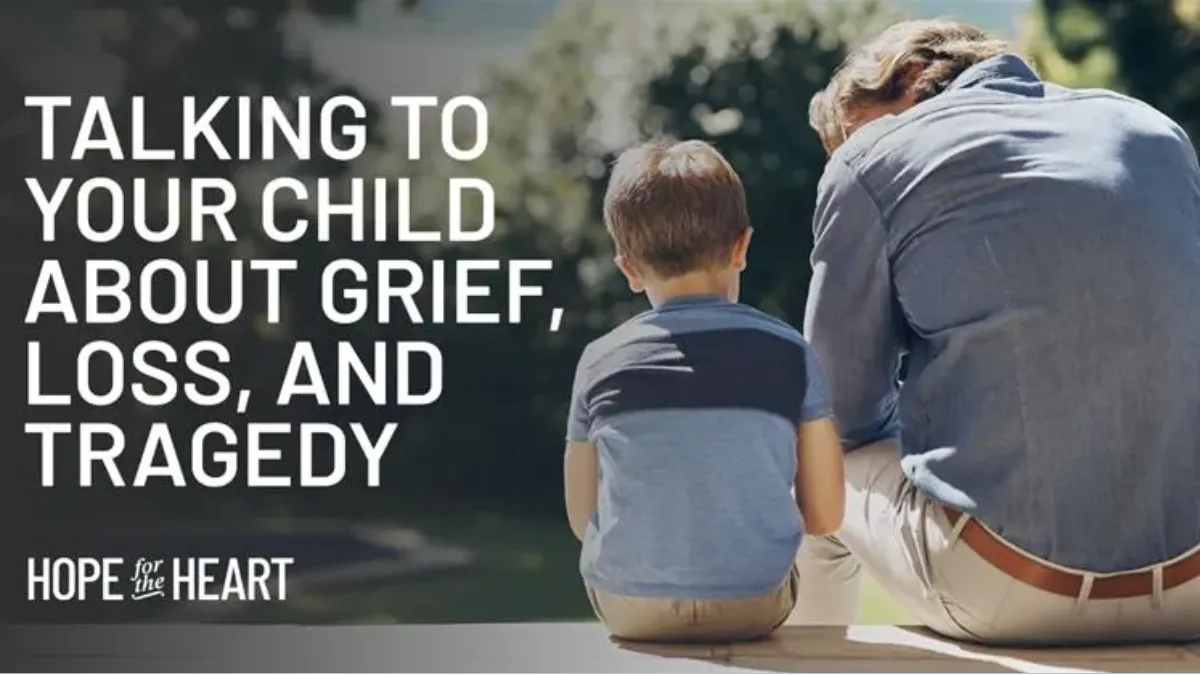
Article Summary
“Talking to Your Child about Grief, Loss, and Tragedy” provides practical, compassionate guidance for helping children process devastating events like the recent Texas floods that claimed many lives. Kids often lack the emotional tools to understand death, trauma, and loss, and parents must respond with age-appropriate honesty, clear language, patience, and ongoing availability. The article outlines key principles such as validating feelings, avoiding confusing phrases, offering reassurance, and watching for signs of complicated grief or trauma that may require professional help. Faith plays an essential role in healing, offering the promise of God’s presence, hope, and eternal life. Hope for the Heart offers Christ-centered resources to equip caregivers because in moments like these, hope truly means everything.
By Eric Scalise, Ph.D.
It’s been more than a week since devastating floods hit central Texas, resulting in the tragic loss of life – many of them children – and leaving more than 100 people still unaccounted for. The country has responded with prayers, coordinated rescue efforts, government resources, financial assistance, compassion, and care on many levels.
Nevertheless, human nature is such that it tends to “move on” and return to the normal rhythms and routines of daily living. But that’s not the case for those directly impacted. Many are still waiting for news of their loved ones, clinging to a thread of hope. Others remain in shock – grasping for answers, attending memorial and funeral services, and wrestling with the trauma of overwhelming grief from the loss of life, property, and a sense of wellbeing. The story continues every day when they wake up in the morning.
The most vulnerable among these are our children. As with other traumatic events, like school shootings, the Guadalupe River flood has created fear, anxiety, confusion, and grief. Depending on their age, many children may lack the emotional or cognitive tools needed to process what happened. Many lost close friends, siblings, trusted camp counselors, parents and other loved ones, as well as beloved pets. And they watched it happen in real time, though they may have been personally spared. Or they heard the news that their friend or loved one was not coming home.
So what do you say to a child and how should we respond?
As a licensed mental health clinician with 45 years of experience and hundreds of conversations just like this, here are some practical thoughts and tips that may be helpful.
Be Age Appropriate – Keep in mind what a child has the capacity to understand and absorb. There is a difference between a four-year-old and a 14-year-old. Be more concrete with a younger child about death (e.g., the person’s body isn’t working anymore). Older children can more easily grasp the complexities of grief and loss.
Be Honest – Appropriate transparency and vulnerability from you can be beneficial. Offer comfort and validate the child’s feelings. Children can pick up inconsistencies in what they are being told and are more tuned in and resilient than we realize sometimes. They often handle truth better than adults.
Be Clear – Avoid ambiguous phrases that can be confusing such as, “Suzy is lost” or “Suzy has fallen asleep” or “Suzy has passed.” Explain in simple terms that “Suzy has died.” Death is a fact of life, and unfortunately, this will not be their only encounter with it. Be clear, but be gentle and compassionate in your explanation.
Be Available – Children will likely have repeated questions and will need to process and reprocess their thoughts. This is true even for adults. So be present, and don’t tell them, “Everything is OK” when at the moment, it’s not. What matters most is helping children feel safe to ask questions, express their feelings, and know they’re not alone in what they’re experiencing.
Be Patient – Feelings, even strong feelings like anger, sadness, anxiety, and fear, can be displayed. The younger a child, the less likely they are to talk through what’s going on inside them as they are to show it. Other forms of expression such as writing, drawing, and creative outlets can be helpful. Don’t minimize their feelings but validate them. Let the child know their emotions are normal, but don’t force them to express what they’re not ready to share. Grieving is a process, unique to each person and each event of a loss.
Be Reassuring – Concerns over additional loss, another tragedy around the corner, or their own safety and wellbeing may be present and ongoing. Let them know they are loved, that you are there, and will continue to care for them. Be sensitive to touch – a hug can go a long way.
Be Practical – Consider doing some tangible activities to help the child remember the person who died, such as looking at photos, sharing stories, or participating in memorial services or fundraising activities if appropriate. These kinds of activities can be healing, help release some of the grief, and restore a sense of control.
Be Prepared – Some forms of grief linger and begin to interfere with other daily activities. Children sometimes become stuck in what’s called “complicated grief.” There can be signs of post-traumatic stress, nightmares, depression, or panic attacks. You may need to seek out a trained trauma-informed therapist or other mental health professional to assist in the short term. Most crises abate in 6-8 weeks, but not for all.
The Place for Faith
As Christ followers, we are not left without hope. Indeed, “We have this hope as an anchor for the soul, firm and secure” (Hebrews 6:19). Research over the years consistently shows that faith matters, especially when tragedy strikes. Bring Jesus into the process with your children. Let them know heaven is real, that one day, God “will wipe every tear from their eyes, and there will be no more death or sorrow or crying or pain” (Revelation 21:4 NLT). That’s our hope. That’s His promise to us.
Resources for You
Here at Hope for the Heart, part of our mission is to bring Christ-centered resources into life’s difficult challenges, resources that offer biblical hope and practical help. Why? Because in times like this, hope means everything.
Our Keys for Living Library addresses topics such as Anxiety, Fear, Grief, Death & Heaven, Hope, and more. We have also developed video-based training materials on Resilience and Trauma Care through our International Christian Coaching Institute.
And remember, “God is our refuge and strength, an ever-present help in trouble” (Psalm 46:1). Hold on to that thought.